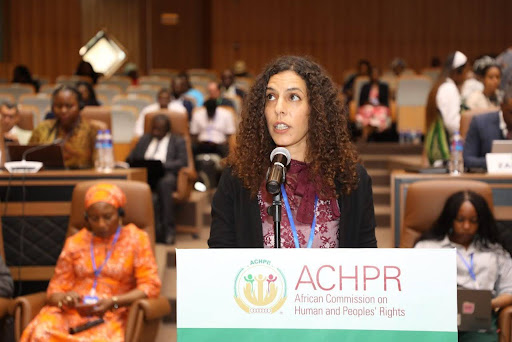
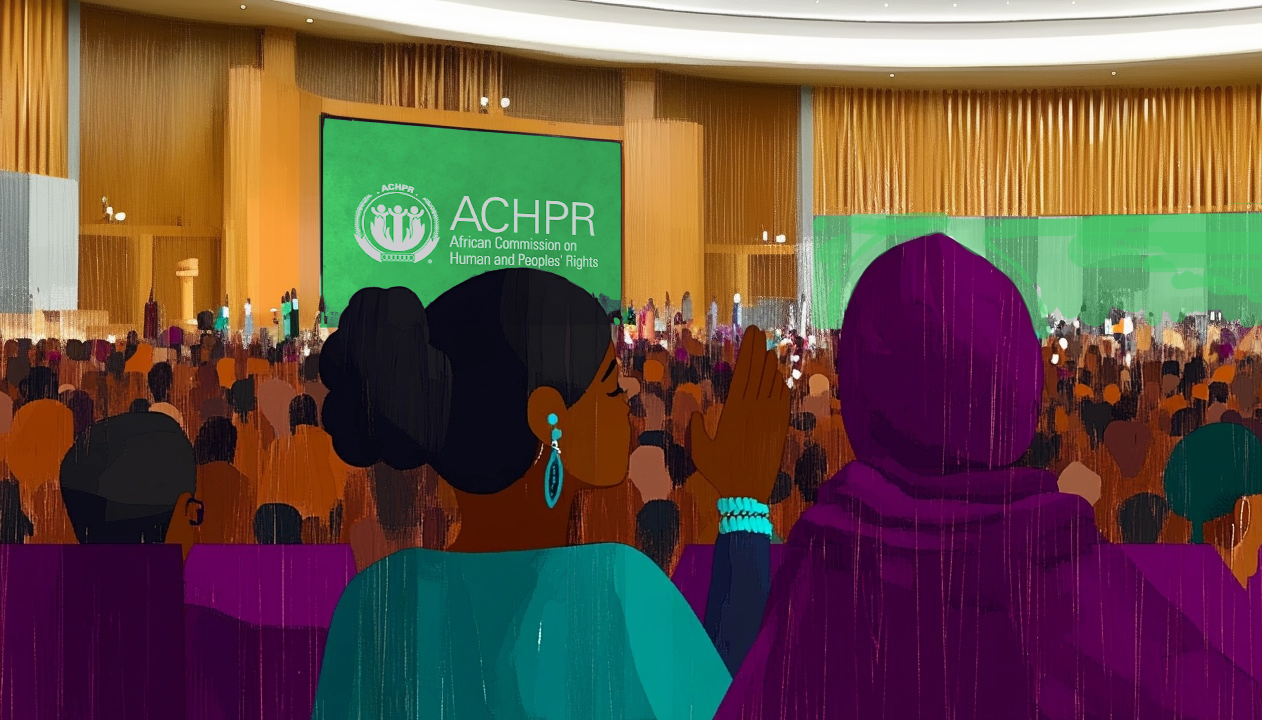
On 11 May 2026, during the 87th Ordinary Session of the African Commission on Human and Peoples’ Rights (ACHPR), ISHR delivered an oral statement on the situation of human rights in Africa.
In Tanzania, ISHR highlighted the increasingly hostile environment for human rights defenders following President Samia Suluhu Hassan’s reelection. In 2025 alone, authorities shut down thousands of online platforms under the guise of “unethical content,” alongside recorded cases of enforced disappearances of opposition figures and defenders.
In the Democratic Republic of Congo, journalists and activists in North and South Kivu continue to be targeted by Congolese authorities and armed groups including M23 and Alliance Fleuve (AFC). Similarly, Burkina Faso was flagged for using laws that do not comply with international standards to restrict civic space and silence human rights defenders.
Angola was noted for the dangerous trend of using “anti-terrorism” charges to silence journalists reporting on matters of public interest. Regarding Kenya’s review during this session, ISHR urged the Commission to call on the State Party to adopt effective measures protecting civic space to avoid a repeat of 2023 to 2025 repressions against protestors.
On Western Sahara, ISHR expressed grave concern over the targeting of Saharawi defenders documenting violations, mobilising communities, or asserting the right to self-determination. Defenders face overlapping forms of criminalisation, physical and psychological abuse, sexual violence, surveillance, and restrictions on fundamental freedoms. ISHR emphasised the need for the African Commission to be granted unhindered access to the territory to monitor the situation of defenders.
In Sudan, civilians continue to endure unbearable conditions in Dillinj, South Kordofan, while thousands seek safety in the Blue Nile State. Two medical professionals were killed in drone attacks in the White Nile state. Local responders and human rights defenders face vicious attacks as they work to save lives and document war crimes. ISHR urged the Commission to engage with women human rights defenders to document war crimes committed against homes and medical facilities.
Finally, ISHR welcomed the UN General Assembly resolution declaring that the transatlantic trade in enslaved Africans constituted the ‘gravest crime against humanity,’ led by Ghana and supported by the African Union and CARICOM States. ISHR urged the Commission to adopt a follow-up resolution on Africa’s Reparations Agenda and The Human Rights of Africans In the Diaspora.