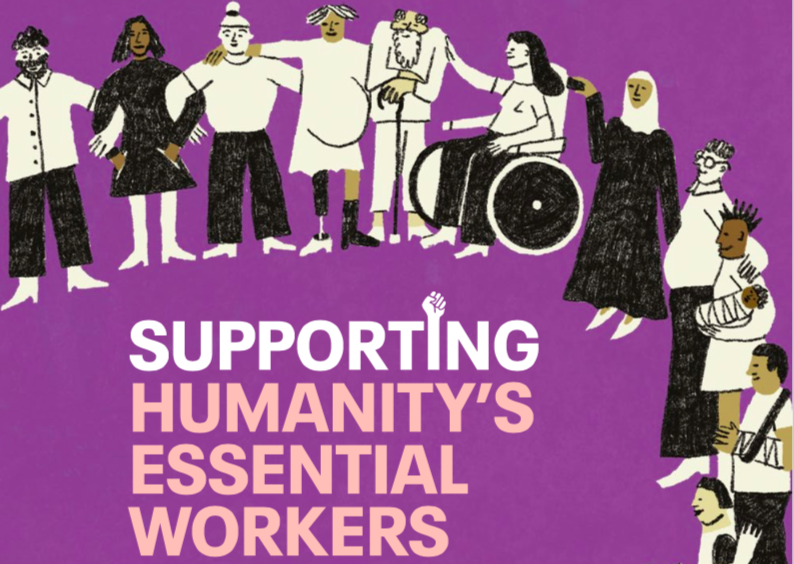
Illustration credits: Images adapted from artworks by Anina Takeff and Rozalina Burkova
under a Creative Commons-Attribution-NonCommercial-ShareAlike 4.0 International (CC-BY-NC-SA
It's difficult to encapsulate such a complex year in a word, but "interconnected" is one that comes to mind when reflecting on 2020. We are proud to have remained deeply interconnected with defenders and to have supported, protected and amplified their work at the national, regional and international levels. With them, the "essential workers" of our times, we strive for a 2021 full of freedom, equality, dignity and justice.
Together we made a significant contribution last year towards a world that is more fair, just and equal. A world where human rights defenders are better recognised, enabled and protected. Thank you for being such an important part of ISHR’s work. Today, ISHR is thrilled to invite you to discover our latest annual report, outlining our key impacts during the last year and our vision for 2021 and the years ahead.
Human rights defenders are people who, whether individually or in association with others, promote and protect the human rights of others. They are people who act with humanity, serve humanity and bring out the best in humanity.
Defenders are at the heart of ISHR’s work. Throughout 2020 we supported human rights defenders, strengthened laws and systems for their protection, and contributed to a safe and enabling environment for their vital work at the national, regional and international levels.
What did we achieve in 2020?
We developed a new five-year Strategic Framework setting out the ways in which we will support and act in solidarity with defenders.
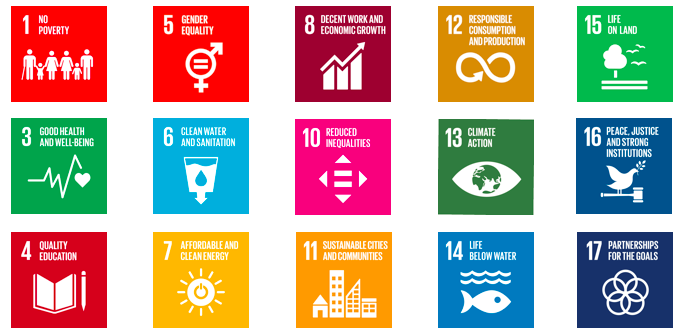
Our work, and that of defenders, contributed to achieving the following Sustainable Development Goals:
Here are just a few examples of our collective impact in 2020:
Working with UN experts, governments from all regions, and major investors to issue public statements of concern regarding human rights in China and to call for independent investigation and monitoring of widespread and systematic violations in Xinjiang and Hong Kong
Partnering with family members, human rights defenders and civil society partners to secure an urgent debate at the UN on the issue of police violence and systemic racism and to mandate the UN High Commissioner on Human Rights to investigate and report on this issue in the US and globally
Working with civil society partners to ensure that key international principles on equality and justice for LGBTI persons are reflected in laws, policies, practices and jurisprudence at the national, regional and international levels
Strengthening our own governance, transparency, accountability and sustainability, including through the establishment of a Working Group on Wellbeing and a Working Group on Non-Discrimination, Diversity and Inclusion which reports both to the Director and directly to the Board.
Collective success
We would like to thank you for your support to ISHR and the defenders with whom we work. Your contributions are vital to our collective human rights impact and success. Now more than ever, we need people who serve humanity. Thank you for supporting ISHR.
Phil Lynch – Executive Director
Vrinda Grover – Chair of the ISHR Board
PS. We’d love you to share our annual report with friends and colleagues who share your passion for human rights and who might be interested in supporting ISHR to achieve human rights impact and change!
The Committee on the Elimination of Discrimination against Women (CEDAW) has released a draft General Recommendation on dismantling gender stereotypes. ISHR's comments call for explicit recognition of the heightened risks facing women human rights defenders, and for States to consult with defenders in tackling stereotypes.
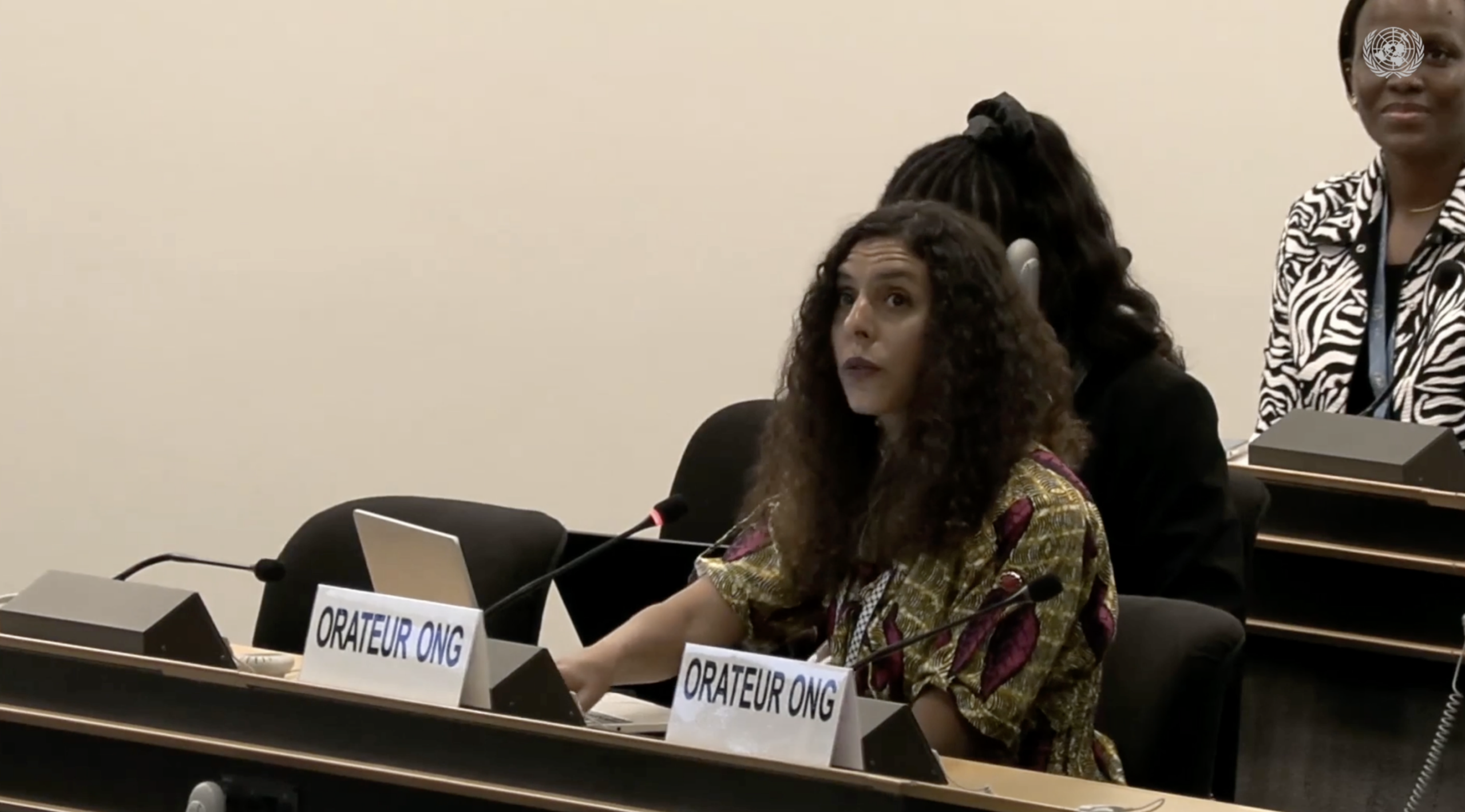
At a Human Rights Council debate with the Independent International Fact-Finding Mission for the Sudan, ISHR delivered a joint statement with Sudanese Women’s Rights Action and the Regional Coalition for Women Human Rights Defenders in South West Asia and North Africa.
At the last session of its current membership, the NGO Committee’s rate of approval for organisations awaiting consultative status dropped to a record low of 5% amidst continued politicisation of NGO engagement at the UN.