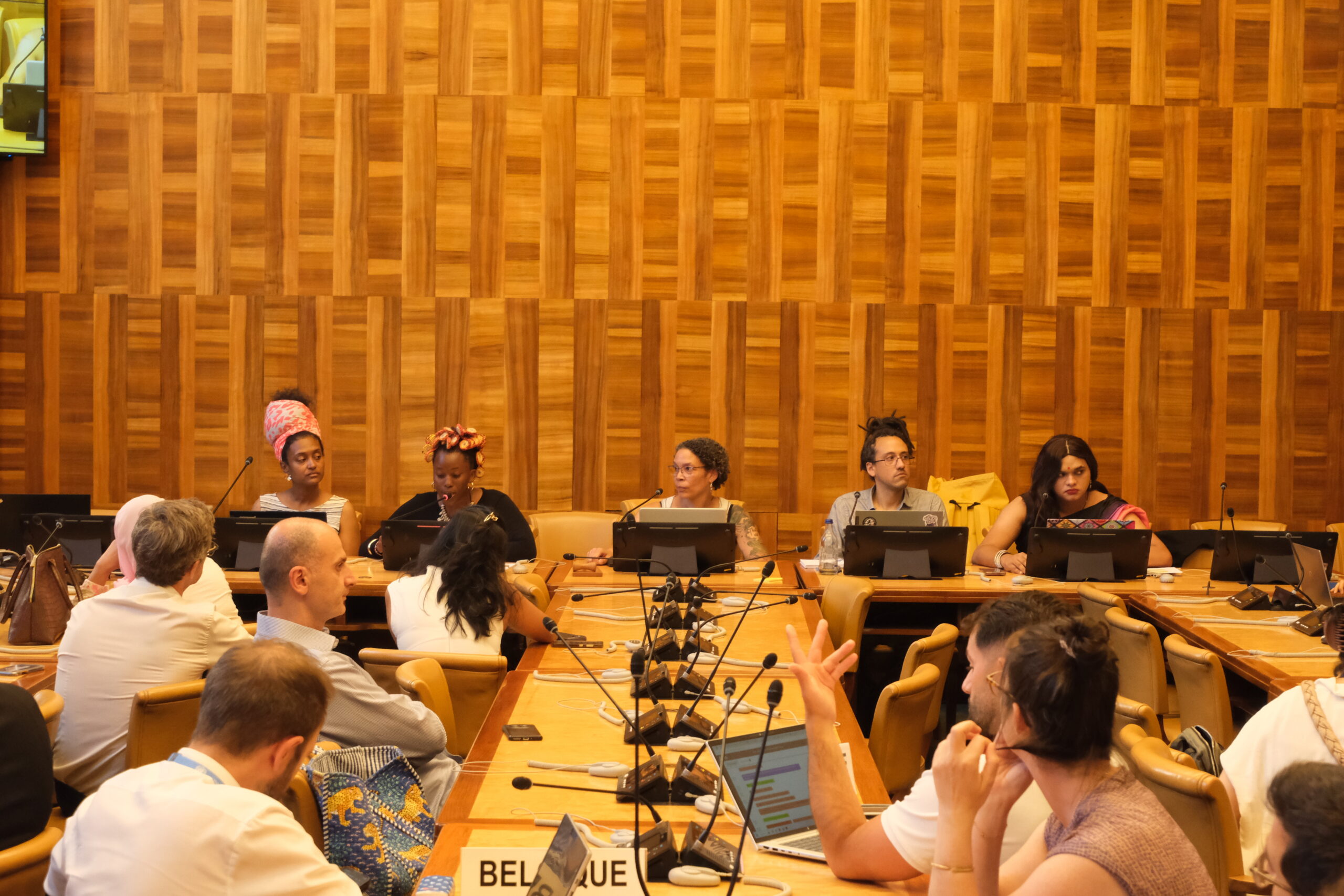
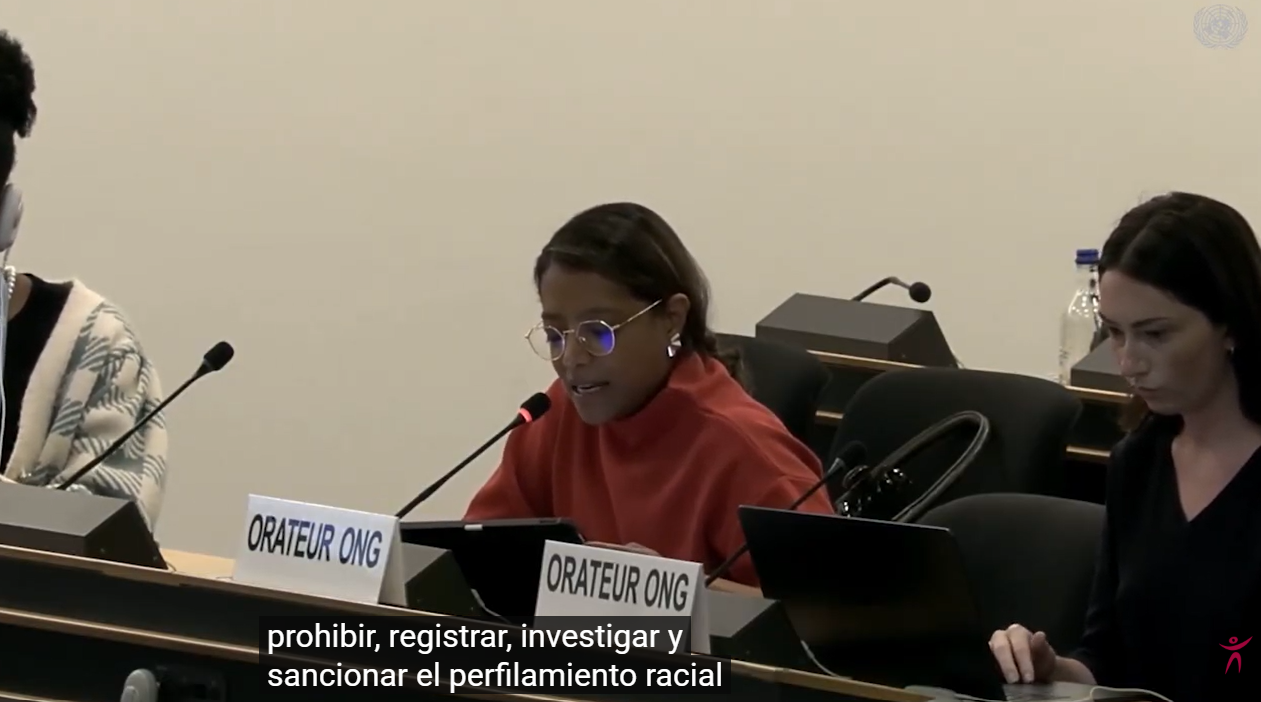
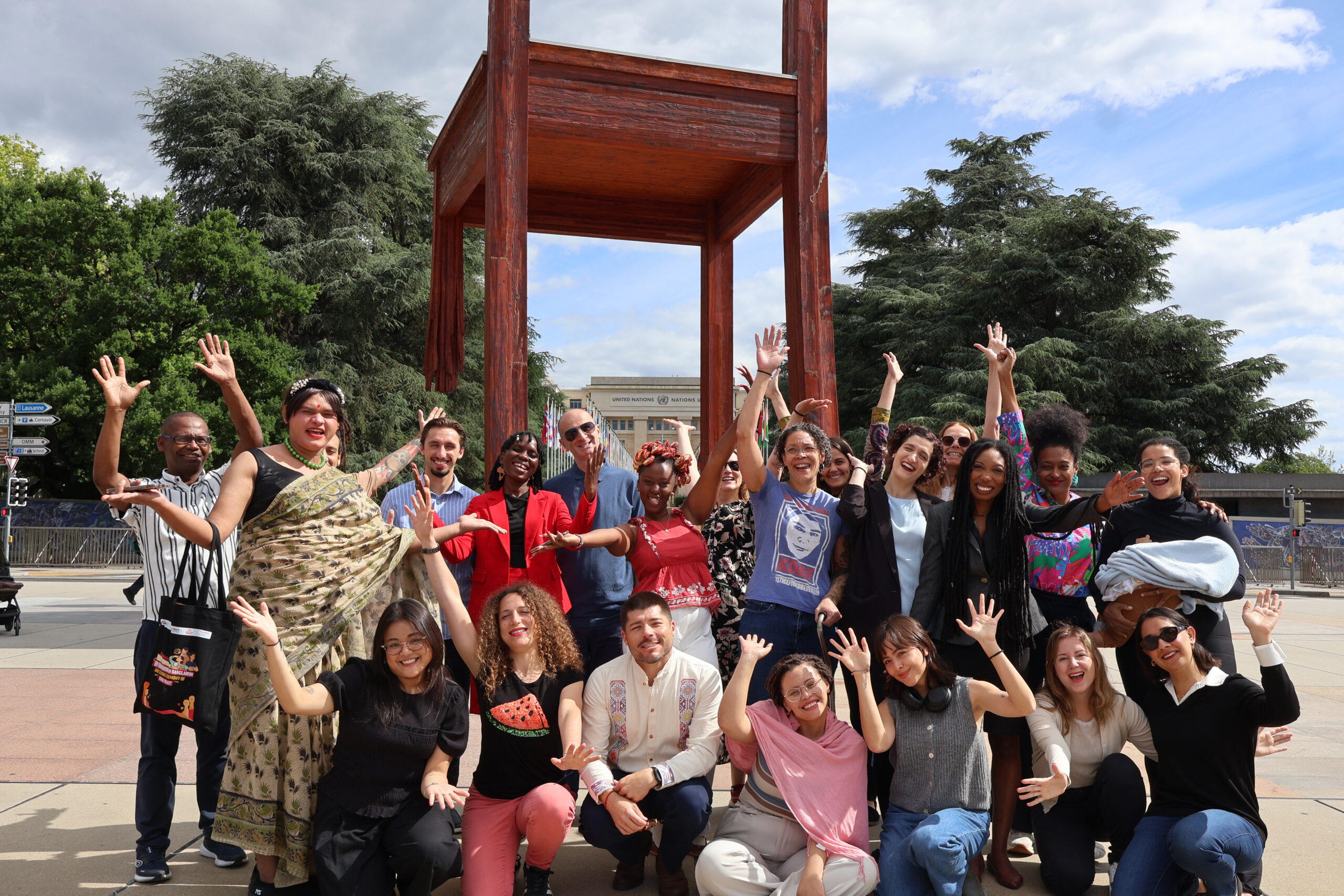
On 18 June, as part of the 62nd session of the Human Rights Council (HRC) and marking the HRC’s 20th anniversary, ISHR, together with the Kenya Ni Mimi Campaign, the Daunte & Kobe No More Names Initiative, DIAFAR, and the Pathchola Foundation, organised a side event examining the links between the experiences of historically marginalised communities and authoritarian practices. Representatives from Germany, Belgium, the European Union, China, Serbia, Spain, Cyprus, Norway, Afghanistan, and the Council of Europe attended alongside NGOs and other participants.
The event, entitled Defending Rights in Unequal Democracies: An analysis of the links between systemic discrimination and democratic backsliding, , featured interventions from Natasha Koskei (Kenya Ni Mimi Campaign), Amity Dimock (Daunte & Kobe No More Names Initiative), Jeremías Pérez (DIAFAR), and Manisha Meem Nipun (Pathchola Foundation), and was moderated by Lamar Bailey Karamañites of ISHR’s Racial Justice Programme.
The session opened with a look at how democratic erosion manifests globally, delivered with an energizing call for power and justice. Speakers described a systematic pattern of states denying the existence of racism while recasting human rights themselves as “ideology” rather than a legal obligation. As Jeremías Pérez put it: “What does not exist has no rights.” When a state declares that human rights are an ideology rather than a legal obligation, and uses public media to ridicule activism, it is telling people to their face that legal protection has ended.
Speakers argued that communities who have been historically oppressed are best placed to identify democratic erosion before it takes hold; they are the ones who sound the alarm when trusted institutions and systems begin to derail. As Amity Dimock noted: “By the time democratic erosion becomes obvious to everyone, it has usually been obvious to marginalised communities for years.”
Drawing from their own experience, the defenders observed that authoritarian tactics such as the criminalisation of dissent, mass surveillance, militarised policing, attacks on gender and racial movements, the shrinking of civic space, funding cuts, and narratives of hate and exclusion are often first tested on historically marginalised communities, including people of African descent, and the LGTBQI+ community. When members of a minority group are targeted by the police, when a society normalises unequal treatment under the law, discrimination becomes normalised. When people are afraid to speak openly about their identity, and when hate speech becomes commonplace, society is already on the wrong path.
This is why it is essential to listen to those most affected. As Amity Dimock highlighted at the session, the people closest to the problem are also the ones closest to the solution. With this in mind, speakers laid out a set of concrete actions for state actors, NGOs, and defenders alike:
- It is not enough to document harm; the international community must drive the implementation of recommendations and ensure accountability.
- Activists need direct access to international mechanisms when persecuted for criticizing injustices.
- Focus on structural violations and concentrated power, asking: “Who violated which structures?” and “Who benefits from public institutions?”
- Create dedicated space for marginalised communities (e.g. LGBTQ+ people, sex workers) to raise their concerns, not only during participation in democratic processes but also on accessibility and suitability of public services.
Beyond these measures, speakers pointed to two broader courses of action: supporting those being excluded, since protecting people at the margins is, in itself, a way of protecting democracy, and investing in those who defend it. For UN representatives, this means building meaningful relationships and coalitions; for States, paying UN contributions on time and addressing the root causes of structural oppression; and for everyone, making space for defenders to speak and committing the time and resources this requires.
Ultimately, dignity is non-negotiable and participation in societal processes guarantees this dignity. As speakers stressed, inclusivity leads to strong civil spaces and protects human rights, and building that inclusive democracy takes more than reform, it takes imagination.
As Natasha Koskei put it: “The task isn’t reform, it’s imagination. And my generation is already rehearsing the alternative: a budget written for citizens, not creditors; safety that protects instead of suppresses; a politics of issues, not tribes; communities that own their own stories; and care treated as infrastructure, not charity. None of it is utopian, we’ve already prototyped it in how we organise.”