Business has a significant impact on human rights – for better and for worse. Strong and enforceable laws and regulations are essential. Businesses should consult, respect and protect human rights defenders and ensure they have robust systems to ensure access to remedy for disputes or violations.
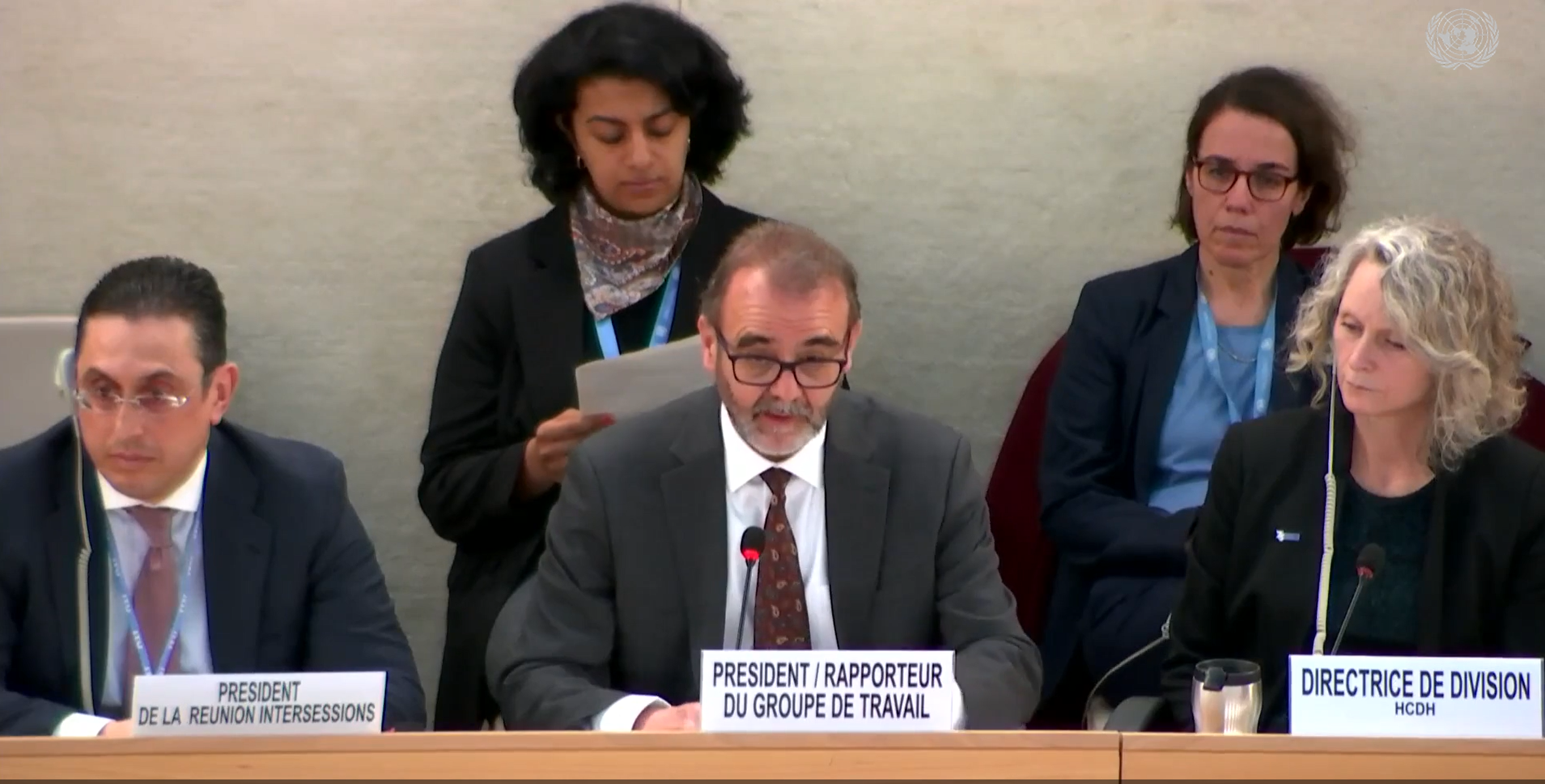
On 17 March 2023, the open-ended intergovernmental working group on transnational corporations and other business enterprises with respect to human rights (OEIGWG) presented its report from the 8th negotiation session and the revised draft of the binding instrument, including State proposals, to the Council.
Background and context
The Working Group was established under the Human Rights Council resolution 26/9 in 2014. The mandate of the Working Group is to develop a legally binding instrument to regulate the activities of transnational corporations and other business enterprises with respect to human rights. Following the adoption of the resolution, many civil society organisations, including ISHR, have contributed significant time and resources to provide constructive inputs and ensure that the Binding Treaty can deliver access to justice for victims and communities. However, progress has stalled, and there is a widely-held view that, following the 8th session, there is a need for urgency in completing the process – there is no better reason for that urgency than the ongoing barriers, threats and killings facing defenders working on corporate accountability, epitomised by the case of Berta Caceres.
In his speech to the Council, the ambassador of Ecuador to Geneva, as the Chair of the treaty-drafting process, emphasised the importance of improving access to justice and reparations for victims of human rights abuses by businesses and their activities. He also noted that a binding instrument (treaty) would complement and enhance the UN Guiding Principles on Business and Human Rights and pre-existing voluntary measures.
The process moves forward…
The 9th negotiation session will take place in October 2023, but significant work has been proposed prior to this date in order to meet the goal of advancing the text. The end of March 2023 marked a deadline for inputs from civil society actors to the most recent text, but future milestones and possible opportunities for engagement include:
- The first week of April: the compilation of the written inputs will be shared among governments.
- April to mid-June 2023: within regional groups (e.g., groups of States comprising the five UN-designated regions), governments will meet in two ‘intersessional meetings’ to discuss, respectively, Articles 1-7 and Articles 8-14 of the draft treaty.
- End June 2023: all regional groups will provide, through a designated ‘Friend of Chair’, their inputs and updates to the draft version of the text.
- End July 2023: the Chair will circulate a new draft of the Binding Treaty text as a whole, informed by the regional consultations and, through those, the inputs of civil society stakeholders.
…while the need for change remains
The current revised draft only refers twice to human rights defenders in the operative paragraphs. ISHR urges the negotiators to accelerate the process, focus on human rights defenders within the text and include reference to defenders explicitly in the following articles:
5.2: States shall take adequate and effective measures to guarantee a safe and enabling environment for persons, groups and organizations that promote and defend human rights and the environment.
⇒ The reference to human rights defenders, and recognition of the right to defend rights, must be maintained in this article, which should also be strengthened by explicitly referencing the right of defenders to be protected and free from intimidation and reprisals.
6.3(d): Communicate regularly with stakeholders, especially those affected or potentially affected, on how they address human rights abuses.
⇒ This provision should be amended to explicitly require that States legislate to require that business enterprises communicate regularly with human rights defenders in the conduct of mandatory human rights due diligence.
6.4(c): Meaningfully consult with individuals and communities whose human rights are likely affected by business activities (including women, children, persons with disabilities etc.).
⇒ This provision should be amended to explicitly require that States legislate to require that business enterprises consult meaningfully with human rights defenders in the conduct of mandatory human rights due diligence.
6.8 quater: State parties shall enact norms to ensure that business enterprises respect the rights of human rights defenders.
⇒ This amendment, proposed by States including Uruguay, Panama, Palestine, Mexico and Brazil, should be included in the text.
7.4: States must guarantee that court fees and rules do not unreasonably burden victims or become a barrier for them. The possibility of waiving some costs in particular cases should be granted.
⇒ This provision should be amended to explicitly recognise human rights defenders among those groups facing heightened barriers in accessing remedies for business related human rights abuses and harms.
15.7: States must establish an International Fund for Victims to provide legal and financial aid while considering barriers faced by women, children, persons with disabilities etc.
⇒ This provision should be amended to explicitly recognise human rights defenders among those groups facing heightened barriers in accessing remedies.
16.4: States must address the specific impacts of business activities and give special attention to those facing heightened risks, such as women, children, persons with disabilities etc.
⇒ This provision should be amended to require that States ensure heightened attention and additional protection for human rights defenders, among other groups.
With these changes, the Binding Treaty would be better positioned to enhance the protection of the environment and the rights of human rights defenders and communities, who are doing crucial work so we can all live sustainably on a healthy planet. In addition, this instrument could reinforce liability for human rights violations and abuses by becoming a new tool to hold companies and governments accountable for their actions. The Treaty would, in this way, act in parallel to the ongoing work to develop national-level legislation requiring risk-based human rights due diligence by companies and facilitating avenues to justice for those negatively affected by corporate misconduct.
Download as PDF