Over 80 countries pledge to defend human rights multilateralism at the UN
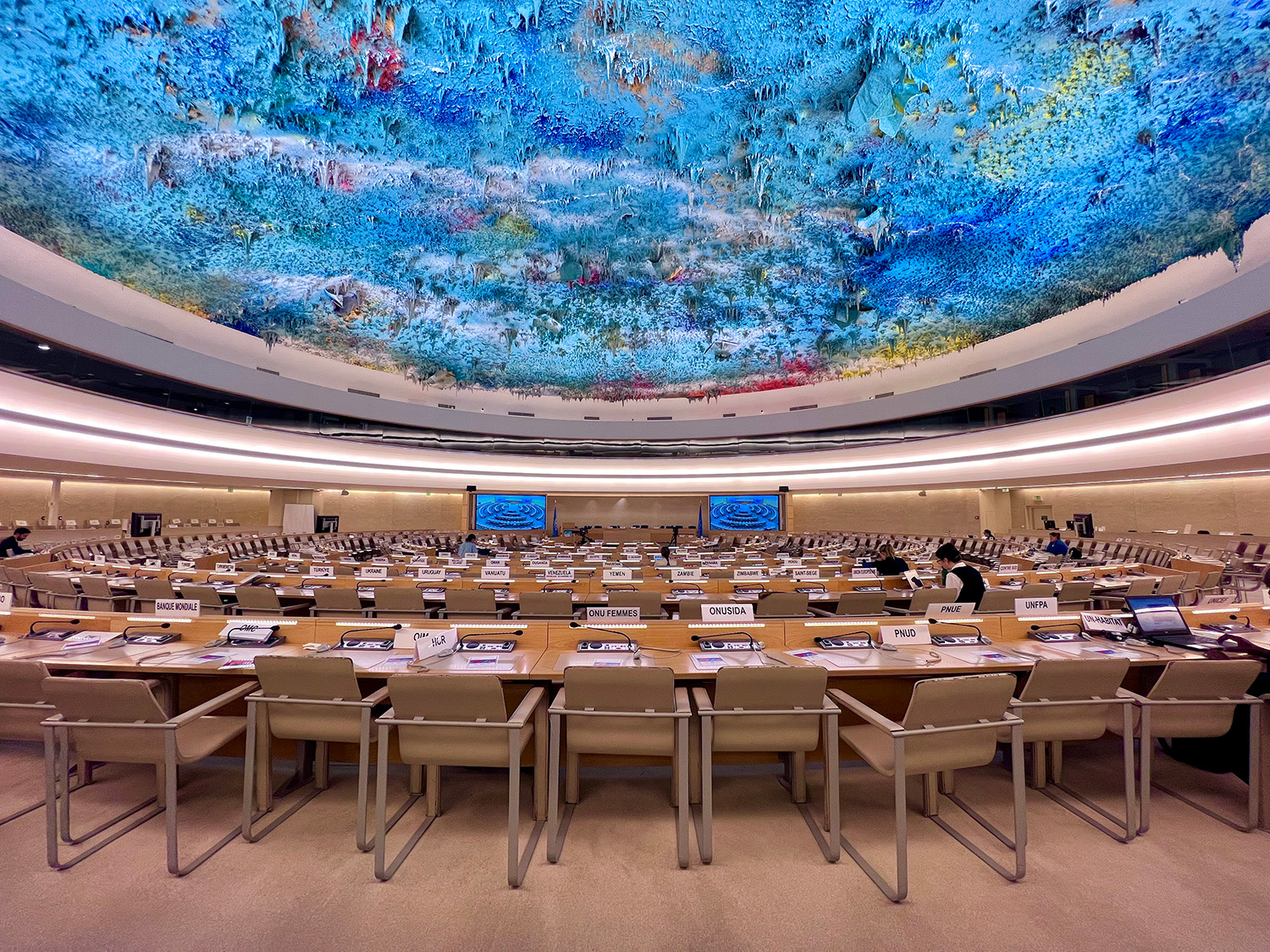
A cross-regional coalition of over 80 UN Member States have issued a joint declaration at the UN Human Rights Council emphasising the critical need to defend multilateralism amidst escalating global conflicts and eroding respect for international law and human rights.
Delivered by Albania’s Ambassador and co-led by Chile, Kenya, Kyrgyzstan and the Netherlands, the statement** asserts that peaceful coexistence of sovereign nations and peoples, and the realisation of universal human rights, are only achievable within an international order centred on the United Nations and full respect for international law.
'We welcome this unambiguous and wide-reaching endorsement of universal human rights, the international rule of law and effective multilateralism by such a large number of States from all regions. Only a principled and consistent defence of international law and human rights can protect us all from the abuses of raw power and callous, short-sighted transactionalism that some would like to impose.'
Raphaël Viana David, ISHR Programme Manager
The joint statement also emphasises that the UN’s three pillars – peace and security, development, and human rights – are interdependent. ‘By addressing the root causes of conflict and empowering individuals, communities and civil society, human rights make our world safer and ensure that development is inclusive, equitable and fair,’ the coalition of States said.
ISHR was pleased to work with the core group of States to develop the declaration and ensure widespread and diverse, cross-regional support for it.
Speaking as a large group dubbed the ‘Friends of Human Rights Multilateralism,’ signatories of the declaration said they seek to renew ‘political will, vision and ambition’ and ‘unwavering commitment’ to the UN human rights system, by pledging to:
Renew commitment to a multilateral human rights system grounded in full respect for the UN Charter and international human rights law.
Defend the universality and indivisibility of all human rights, and commit to their promotion, protection and fulfilment as indispensable for global peace, security and sustainable development.
Engage in the UN80 reform process to maintain a credible, adequately resourced human rights system, responsive to State’s needs for technical assistance and to the demands of victims and affected communities for justice and accountability.
Prioritise securing adequate, predictable and sustainable funding for the UN human rights pillar.
Cooperate in good faith with all UN human rights bodies, safeguard their independence, and ensure a safe and enabling environment for civil society engagement, preventing and addressing intimidation, reprisals and sanctions against those cooperating with them.
Enhance the Human Rights Council and strengthen its complementary relationship with other UN bodies in order to contribute to prevention, peace, security, and sustainable development, and to uphold international law.
'States have charted a clear path forward. Now, they must walk the talk. They must unite to back up ambitious efforts in UN reform talks for stronger and better resourced UN human rights bodies, including the Human Rights Council.'
Phil Lynch, ISHR Executive Director
States also highlighted that, despite significant political and financial obstacles, the UN human rights system continues to achieve transformative results, from supporting local legal reforms to advancing global standards in equality, environmental protection, and digital rights.
The signatories further emphasised the chronic underfunding of the UN human rights pillar, echoing a joint statement delivered by Chile on behalf of over 40 States last December that warned of devastating funding cuts to UN rights bodies.
In a major report launched last October, ISHR uncovered how States have attacked the UN’s human rights funding, and most recently analysed the catastrophic outcomes of the latest budget negotiations for human rights in the context of UN reform.
'The principles and aspirations in this declaration will go nowhere if the UN remains so gravely depleted and underfinanced. All States must pay their United Nations dues in full and on time, and step up to secure and defend adequate and sustainable funding for human rights in budget negotiations at the General Assembly.'
Raphaël Viana David
As of the UN’s last public update (26 February), only 73 Member States have paid their contributions to the organisation’s regular budget in full.
Countries from all regions endorsed this latest declaration, which built on a first joint statement on human rights multilateral cooperation led by the same group (minus Kenya) and delivered by Kyrgyzstan at the 58th Human Rights Council, in March 2025 – endorsed by more than 70 States.
**List of signatories (as of 2 March 2026, 12:00pm CET), 84 States:
Afghanistan, Albania, Algeria, Andorra, Armenia, Australia, Austria, Bahamas, Bangladesh, Barbados, Belgium, Bulgaria, Cabo Verde, Canada, Chile, Colombia, Costa Rica, Croatia, Cyprus, Czechia, Dominica, Democratic Republic of the Congo, Ecuador, Egypt, Estonia, Ethiopia, Fiji, Finland, France, Gambia, Georgia, Germany, Ghana, Greece, Guatemala, Hungary, Iceland, India, Ireland, Italy, Japan, Kenya, Kyrgyzstan, Latvia, Liechtenstein, Lithuania, Luxembourg, Malawi, Malaysia, Maldives, Malta, Marshall Islands, Mauritius, Mexico, Moldova, Monaco, Mongolia, Montenegro, Morocco, Netherlands, New Zealand, Nigeria, North Macedonia, Norway, Panama, Poland, Portugal, Republic of Korea, Romania, Saudi Arabia, Singapore, Slovakia, Slovenia, South Africa, Spain, Sweden, Switzerland, Tajikistan, Thailand, Türkiye, United Kingdom, Ukraine, Uruguay, Vanuatu.
Author
Raphaël Viana David
Raphaël is ISHR's China and Latin America Programme Manager in our Geneva office. He joined ISHR in 2018.
A cross-regional coalition of over 80 UN Member States has issued a joint declaration at the UN Human Rights Council emphasising the critical need to defend multilateralism amidst escalating global conflicts and eroding respect for international law and human rights.
In a landmark ruling against Burundi, the UN Committee against Torture has set a precedent on the protection of lawyers and human rights defenders engaging with UN mechanisms, affirming that reprisals for cooperating with the UN violate the Convention Against Torture.
Are you a human rights defender working on democratic backsliding and/or racial justice, keen to use the UN to push for change at home? If so, apply for the 2026 edition of ISHR’s flagship training, the Human Rights Defender Advocacy Programme (HRDAP)!