Egypt: Reform unjust vice laws, guarantee open civic space
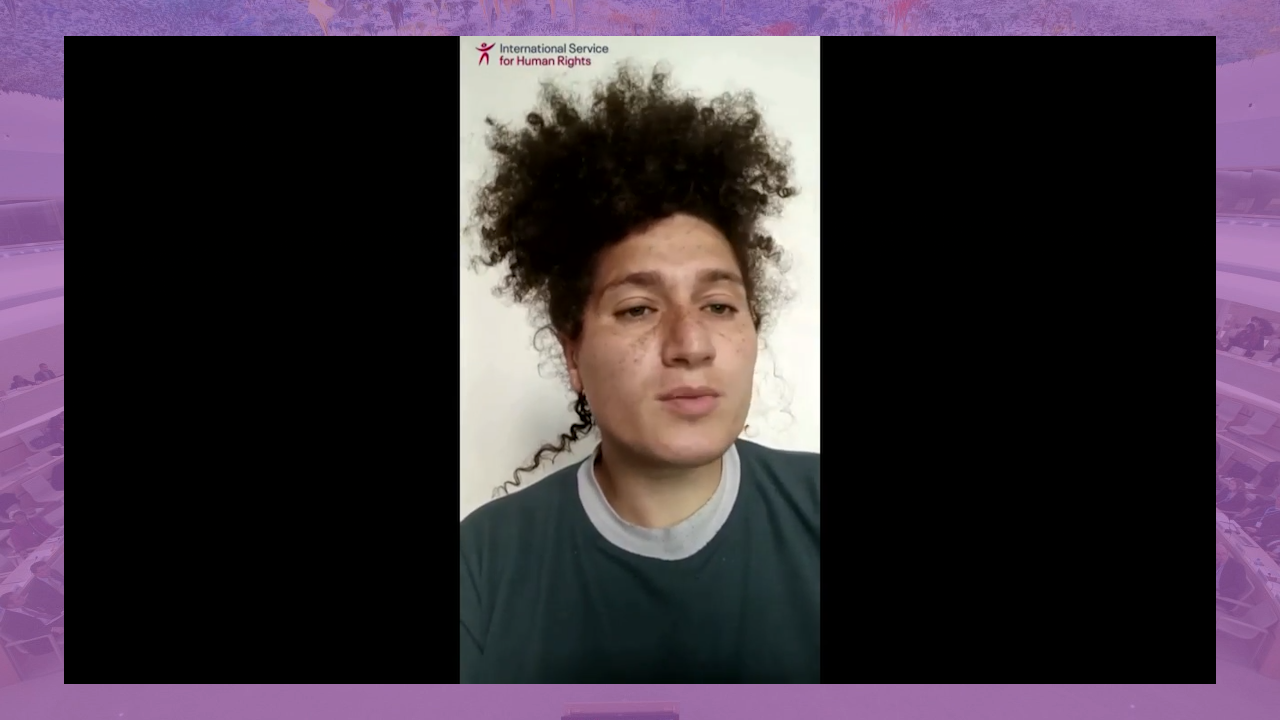
During Egypt's UPR adoption at HRC59, Nora Noralla delivered a joint statement on behalf of ISHR, Cairo 52 and Middle East Democracy Center. Watch and read the full statement below.
We urge Egypt to implement recommendations it received regarding ensuring guaranteeing the right to non-discrimination for all, the right to fair trial and ensuring an open civic space including releasing all those arbitrarily detained, especially human rights defenders and political prisoners.
We also urge Egypt to implement the UPR recommendation by Chile to ‘reform the laws on vices to prevent their use as a tool to restrict fundamental rights and freedoms, especially those of activists, women and the LGBTIQ+ community’.
The arbitrary application of vice laws in Egypt are leading to serious human rights violations. These laws include Law 10/1961, the Penal Code, and Cybercrime Law 175/2018, all of which contain provisions that lack clarity and are broadly interpreted by authorities. These violations of constitutional rights, such as non-discrimination, the right to a fair trial, the right to privacy, freedom of expression including online, with a specific focus on their impact on women, LGBTQ+ individuals, and the general populace.
Egypt’s vice laws, rooted in moralistic interpretations that are used to prosecute individuals, are characterised by their vague language, granting excessive discretion to law enforcement and judicial authorities. The lack of clear definitions for terms such as ‘debauchery’ or ‘violation of family values’ allows arresting and investigating officers’ significant latitude in their interpretations. This undermines the constitutional guarantee of a fair trial, as enshrined in the Egyptian Constitution
Women, particularly those from lower socioeconomic backgrounds, and LGBTQ+ individuals are disproportionately targeted under vice laws. In addition, foreigners suspected or arrested for vice crimes face discrimination through entry bans and deportation without thorough judicial processes.
The use of vice laws to suppress dissent and freedom of expression is pervasive. Social media users, influencers, and ordinary citizens face prosecution for content deemed immoral by the authorities. This practice undermines freedom of expression protections under the ICCPR.
Individuals suspected of engaging in immoral behaviour face discrimination and dismissal from public employment based on ambiguous terminology within internal bylaws and administrative laws, leading to violations of their right to work.
Ahead of the 89th session of the African Commission on Human and Peoples’ Rights, the NGO Forum convened an inaugural panel on advancing water justice and democratic inclusion for Communities Discriminated on Work and Descent in Africa.
At the margins of the 89th session of the African commission, civil society groups discussed the growing challenges and threats weighing on journalists working the Sahel.
UN experts officially warned Russian authorities they were looking at allegations of laws placing strict and discriminatory burdens on the work of Indigenous rights groups and activists.