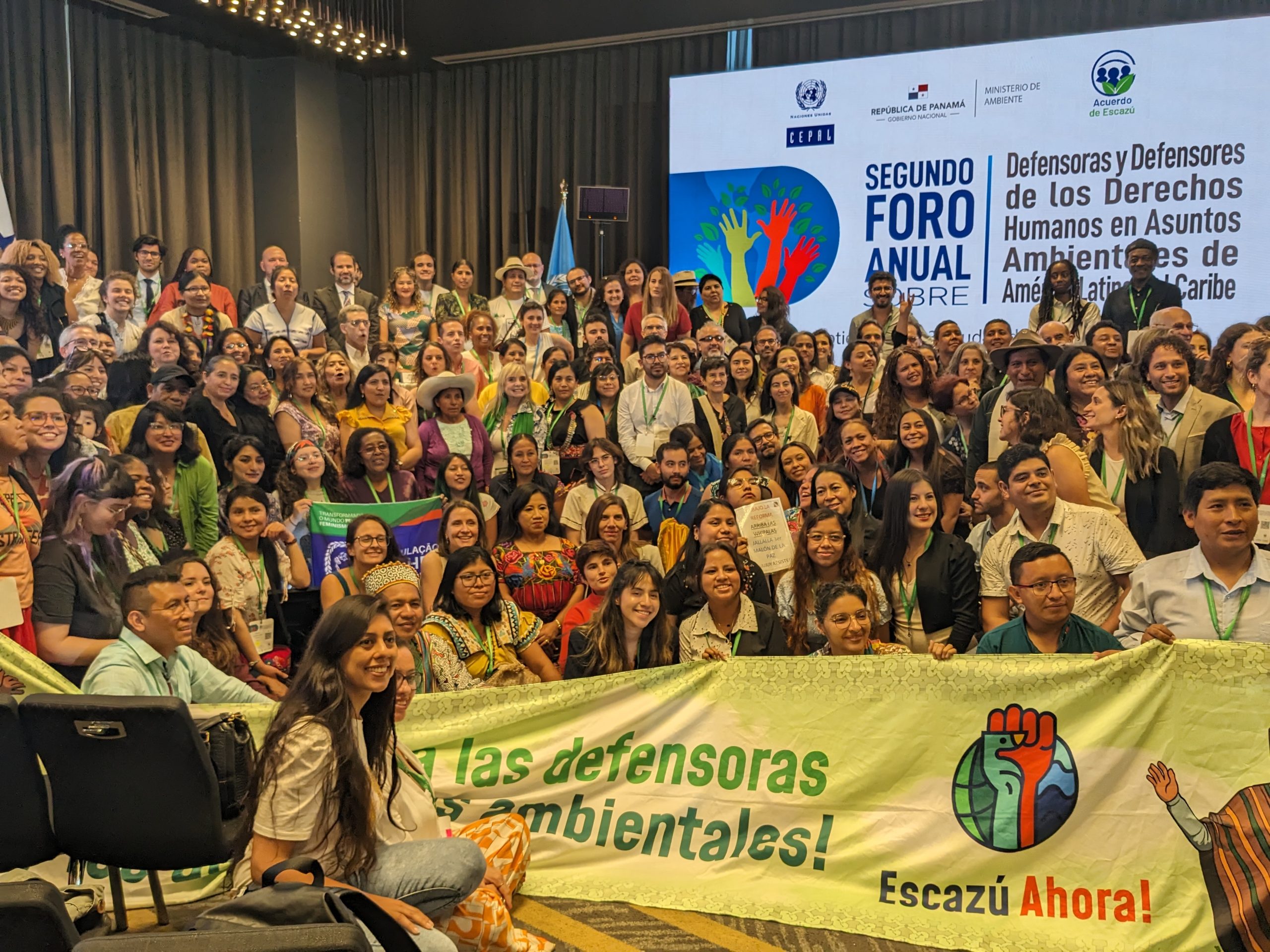
At the Second Annual Forum on Human Rights Defenders in Environmental Matters in Latin America and the Caribbean, defenders from 27 countries in the region came together to discuss the Draft Plan of Action on environmental human rights defenders (EHRDs), designed to support the implementation of Article 9 (on human rights defenders) of the Escazú Agreement.
During the Forum, environmental defenders discussed the Plan in detail. Key areas identified for strengthening the Plan were:
- A section on prevention, on impunity and indicators to track implementation;
- The need to greater articulation of different types of EHRDs and their needs;
- Greater acknowledgement of the contributions of indigenous leaders, Afro descendants;
- The need to build capacity (and protection of) justice operators
- The need for reference to the financing of civil society groups as key to implementation of EA and the Plan.
The Plan of Action is ultimately in the hands of States. It is expected to be presented at the next Conference of Parties in April 2024 for adoption.
In April 2024, the Committee to Support Implementation and Compliance of the Escazú Agreement will start to consider communications from members of the public and States.
According to its rules of procedure, ‘(t)he Secretariat shall provide the services required for the work of the Committee, subject to availability of resources’. There is concern that the Secretariat is under-funded and will have limited capacity to support the Committee when it faces – what is expected to be – a high number of communications.
‘It will be essential that all States contribute to the voluntary funds to ensure the Escazú Committee can function effectively and confidently from the start,’ said ISHR’s Javier Urizar.
Over the next months, the Committee will also be defining its methods of work, including how to receive communications safely and how to deal with the risk of reprisals against those engaging with the Committee.
The Forum closed after three days of discussion. One major issue discussed was the need to fund environmental defenders in their work, including in regard to the implementation of the Escazú Agreement.
‘Why don’t States commit to directing the same amount as they spend on State initiatives to meaningfully address environmental degradation and climate change, to funding independent civil society groups?’, asked ISHR’s Eleanor Openshaw.