
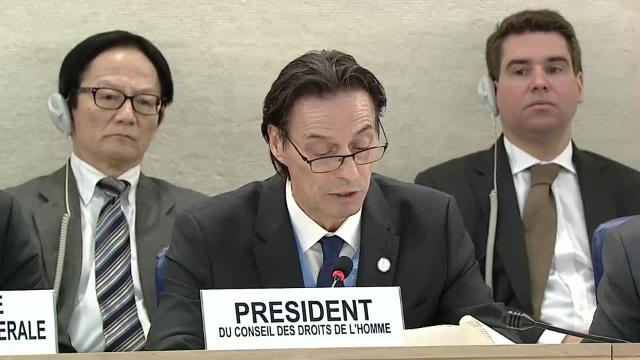
HRC39 | States must respond to allegations of rights abuses
ISHR has called on the Human Rights Council President to urge 55 States to respond to communications by UN experts regarding alleged human rights violations.
In a statement delivered to the 39th Session of the Human Rights Council, ISHR reacted to the latest Joint Communications Report of the UN Special Procedures – independent human rights experts, appointed to monitor and report on human rights violations and to advise and assist in promoting and protecting rights. The report reveals that of the 55 states who have not responded to at least one initial letter from the UN experts concerning allegations of rights violations, 19 are Council members.
As Helen Nolan of ISHR explains, many of these states are repeat offenders, cited regularly in these reports for failing to respond.
‘In just this report, Brazil, Cuba, Egypt, Kenya and Mexico have failed to react to at least two communications from UN experts addressing alleged human rights abuses,’ says Nolan. ‘That list is eerily similar to the one in March and in June.’
Remaining Council members who failed to reply include Angola, Burundi, Chile, China, Ethiopia, Hungary, Iraq, Pakistan, Peru, Philippines, Republic of Korea and United Arab Emirates.
‘States aren’t the only actors who need to step up their cooperation,’ added Nolan. ‘We regret that several communications involving human rights defenders working in the context of human rights and business remain unanswered by the companies involved.’
ISHR’s statement noted that under GA Resolution 60/251, Council members must ‘fully cooperate with the Council.’ Yet, the report cites cases of reprisals involving these members.
In Iraq, Faisal Al Tamimi received numerous death threats and suffered an attempt on his life for engaging with UN human rights mechanisms. In Rwanda, Robert Mugabe was detained and questioned for several hours, also to prevent him from cooperating with the Council and Special Procedures.
‘We call on Iraq and Rwanda to take swift action to guarantee the rights of these human rights defenders,’ said Nolan.
Watch the video of the statement here:
Read the statement in full here.
Photo credit: UN Web TV