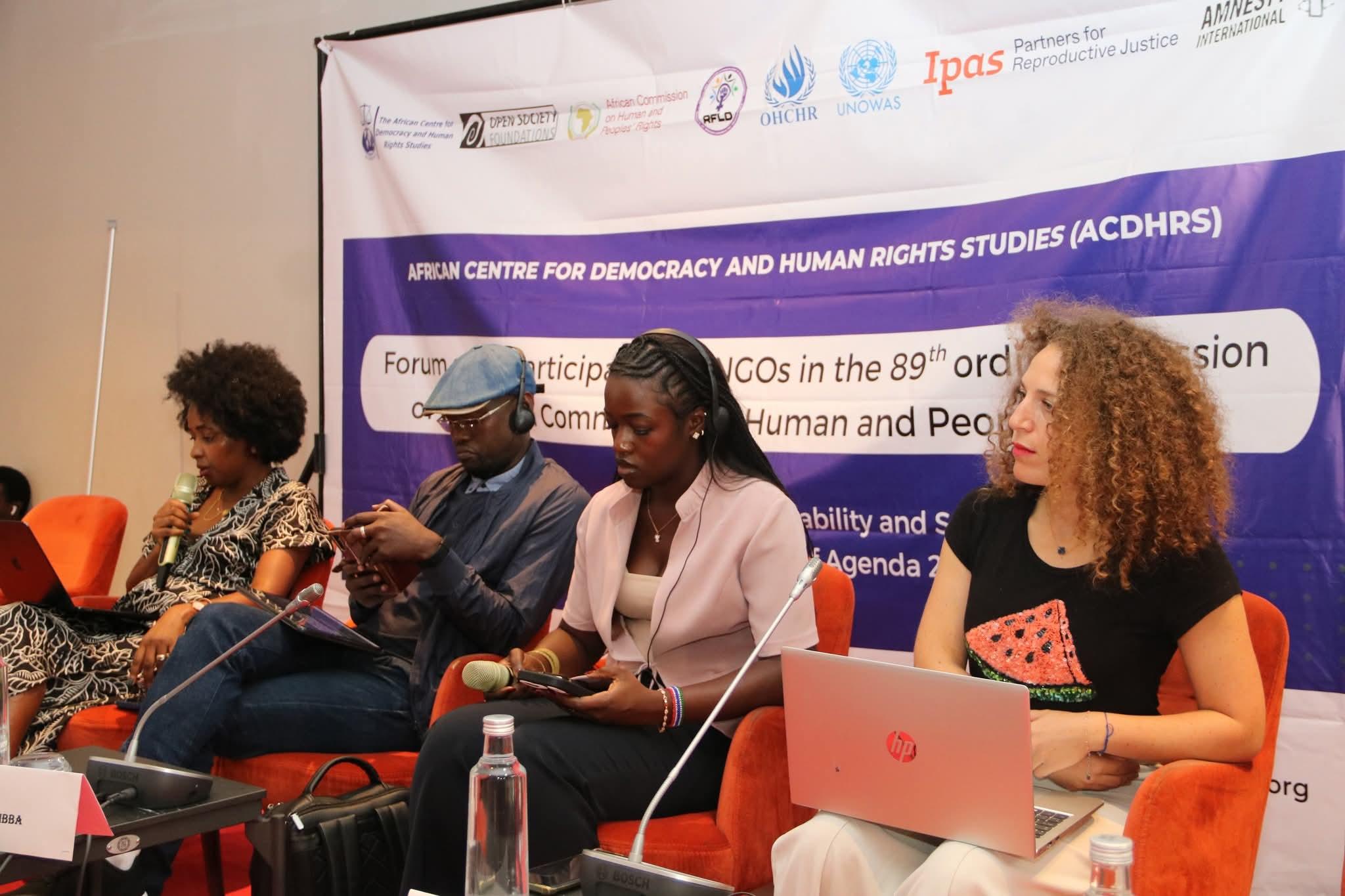
The panel on Civic Space and Cross-Border Challenges in Central Africa was organised by the REDHAC (Réseau des Défenseurs des Droits Humains en Afrique Centrale or Human Rights Defenders Network in Central Africa) and co-sponsored by ISHR and AfricanDefenders. It examined how restrictive laws, security operations, political repression and cross-border movements affect the ability of human rights defenders and civil society organisations to operate freely. Moderated by Joseph Bikanda of African Defenders, the discussion featured contributions from Tresor Nzila of the Action Centre for Development in the Republic of Congo, Maximilienne Ngo Mbe of REDHAC and Honorable Commissioner Rémy Ngo Lumbu, the Special Rapporteur on Human Rights Defenders and focal point on reprisals and freedom of association and assembly at the African Commission on Human and Peoples’ Rights.
The panel drew attention to the fact that cross-border challenges extend well beyond migration, trade, and security dimensions. Participants were given the opportunity to share examples. Panelists and participants noted that border controls, security measures, and political tensions can directly erode civic space by impeding the movement of human rights defenders, journalists, and civil society organisations. Such restrictions, it was stressed, prevent organisations from accessing affected communities, carrying out fact-finding missions, documenting human rights violations, and coordinating advocacy efforts across national bordersm as echoed by participants from Chad and Mauritania.
Referring to the situation in Central Africa, Mr. Trésor Nzila stressed that security operations are frequently invoked to justify measures that curtail fundamental freedoms. He referred to the operation known as Mbatha Yabakolo in the Republic of Congo, which entailed the mass return of Congolese refugees from the Democratic Republic of the Congo. He noted that activists who documented and challenged this operation were reportedly designated as “enemies of the state,” thereby illustrating the extent to which human rights work can expose defenders to intimidation and reprisals. A participant from Algeria expressed similar concerns, stating that she couldn’t even come back to her own country after denouncing the disappearance of her son and, was banned entrance at the airport.
Ms. Maximilienne underscored that countries across Central Africa face deeply interconnected challenges, as communities, languages, conflicts, and livelihoods routinely span borders. She highlighted that human rights defenders working on issues such as migration, pastoralism, climate change, and displacement may encounter similar restrictions in neighbouring countries. It was further noted during the discussion that civic space can be constrained not only by State authorities but also by armed groups, thereby exposing communities and defenders to multiple and overlapping sources of pressure.
Participants expressed concern over the limited legal and institutional protections available to human rights defenders operating across borders. In several cases, it was noted that protection depends heavily on the support of lawyers, civil society partners, and organisations willing to provide temporary shelter, food, and other essential assistance. Participants also drew attention to the particular vulnerability of journalists, political refugees, and activists who face expulsion, arbitrary arrest, detention, restrictions on nationality, and other forms of transnational repression, as echoed in another panel on the same theme.
The intervention of Commissioner Rémy Ngo Lumbu underscored the need for stronger engagement by the African Commission on Human and Peoples’ Rights and for greater efforts to address the structural challenges confronting civil society. He invited civil society to report cases to his mandate, including cases of reprisals.
Participants called upon the Commission to strengthen its protective mandate, engage Governments through dialogue, and support the establishment of protection mechanisms.
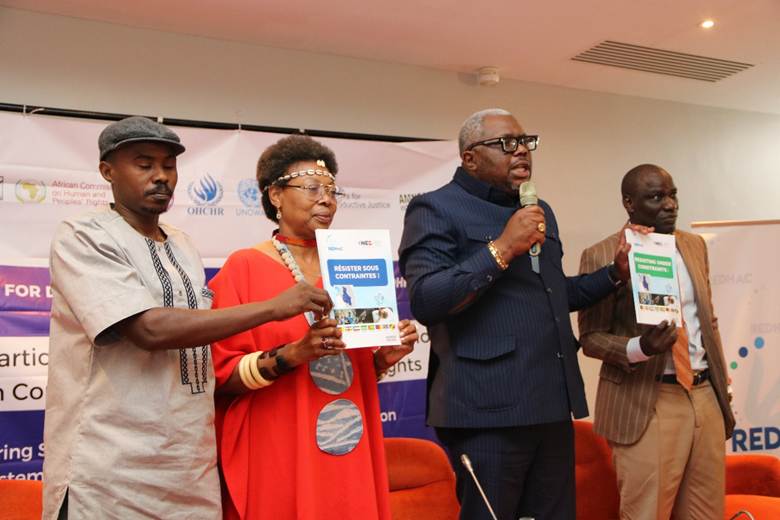
Finally, the panel took the opportunity to officially launch the report on civic space and cross-borders challenges, which include case-studies and more statistics.
Recommendations
- Strengthen regional cooperation among human rights organisations and civil society actors to coordinate cross-border protection, information sharing and joint advocacy.
- Establish effective protection mechanisms to provide legal assistance, emergency shelter and other essential support for human rights defenders, journalists and activists facing threats, arbitrary arrest, expulsion or transnational repression.
- Ensure respect for human rights during security operations by preventing the misuse of security measures, border controls and migration policies to restrict civic space, intimidate activists or suppress legitimate human rights work.
- Enhance the role of the African Commission on Human and Peoples’ Rights in monitoring violations, engaging concerned governments, investigating reprisals against human rights defenders and ensuring accountability for abuses.