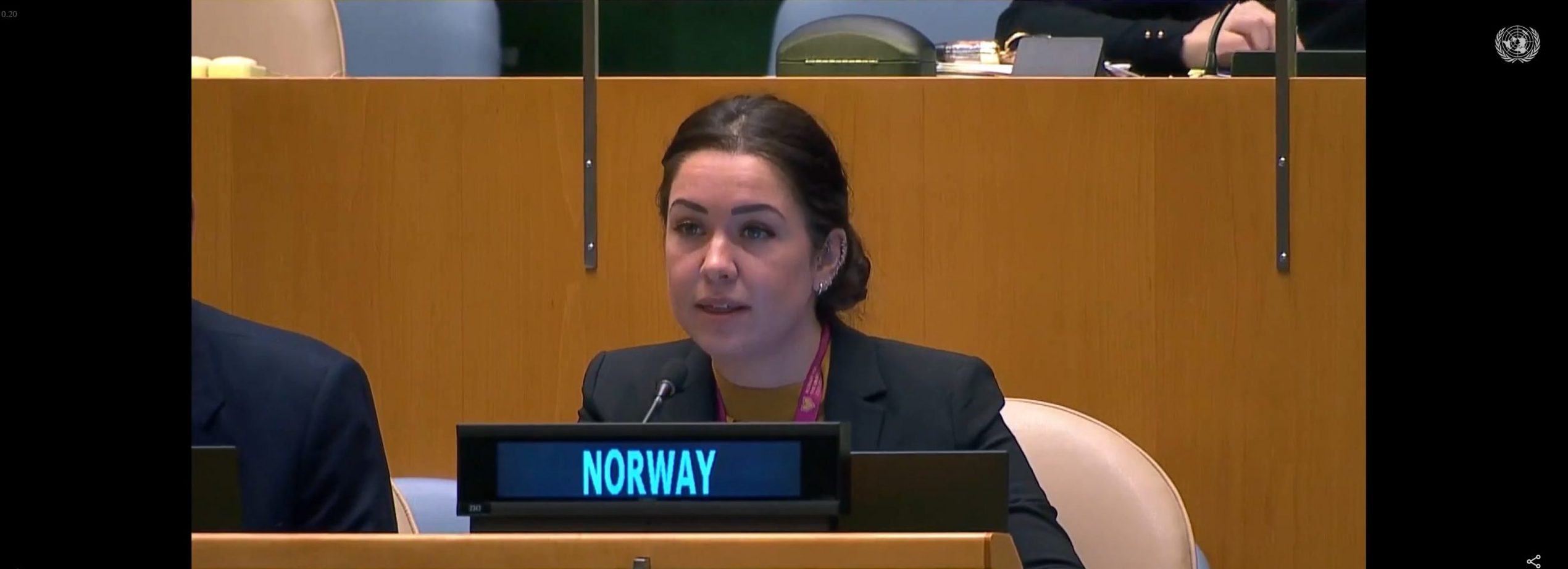
Following weeks of negotiation, States supported a resolution led by Norway focusing on the COVID-19 pandemic and the important and legitimate role that human rights defenders have played in its response, as well as the challenges faced as a result.
‘This resolution is incredibly timely given that globally civil society have reported harassment, surveillance and threats against human rights defenders during the pandemic often carried out under the guise of implementing emergency measures. Despite this, the work of defenders became all the more essential as they filled gaps and provided services to communities: from whistleblowers exposing mismanagement of the pandemic, to health workers servicing vulnerable groups, to advocates and journalists working to ensure emergency measures were proportionate’, said ISHR’s Tess McEvoy.
The UN and its Special Procedures experts have issued regular public calls providing guidance and reminding States of their duty to comply with international human rights standards while combating COVID-19; this resolution builds on these calls. Specifically, the Third Committee recognised the critical work of human rights defenders during the pandemic response and recovery, that they worked to ensure responsive measures were inclusive, safe and accessible, provided essential services, pursued transparency and accountability, and countered disinformation.
The resolution recognised that the pandemic exacerbated existing challenges, online and offline, for defenders, such as misinformation, intimidation, incitement to discrimination, surveillance, attacks, and restrictions on rights to assembly and expression. The resolution calls on States to ensure that emergency measures are not misused to endanger defenders or unduly hinder their work
Beyond elements on COVID-19, ISHR welcomes other new developments in this resolution, including:
- Strengthened language on gender equality, as well as language acknowledging the diversity of human rights defenders;
- Recognition of restrictions on access to resources for defenders;
- References to the role of young people in contributing to human rights, democracy and the rule of law;
- Strengthened language on surveillance and the use of national security offences against defenders;
- Calls on States to seek to improve the effectiveness of existing protection mechanisms for defenders; and
- Calls on States to promote through public statements the important and legitimate role human rights defenders play and to denounce stigmatisation of their work.
However, we note that these achievements and the passage of the resolution by consensus, meant that certain concessions were made. For example references to ‘morality and public order’ to justify restrictions against defenders that were included in the 2019 resolution were maintained in this text, despite opposition to its inclusion. Furthermore, strong language proposals on surveillance, national security and counter terrorism were weakened throughout the negotiations despite consistent support from certain States and civil society.
Finally, we welcome the leadership of Norway and the decision of certain countries to co-sponsor the text for the first time, including Sierra Leone and São Tomé and Principe, as well as the continued support of other cosponsors of the resolution again this year.¹
¹ Cosponsors: Albania, Andorra, Antigua and Barbuda, Argentina, Armenia, Australia, Austria, Belgium, Bolivia (Plurinational State), Bosnia and Herzegovina, Botswana, Brazil, Bulgaria, Cabo Verde, Canada, Central African Republic, Chile, Colombia, Congo, Costa Rica, Côte D’Ivoire, Croatia, Cyprus, Czech Republic, Denmark, Dominican Republic, Ecuador, El Salvador, Estonia, Finland, France, Georgia, Germany, Greece, Guatemala, Honduras, Hungary, Iceland, Ireland, Italy, Japan, Latvia, Lebanon, Liechtenstein, Lithuania, Luxembourg, Macedonia, Mali, Malta, Marshall Islands, Mexico, Micronesia (Federated States of), Monaco, Mongolia, Montenegro, Myanmar, Netherlands, New Zealand, Norway, Palau, Panama, Paraguay, Peru, Poland, Portugal, Republic of Korea, Republic of Moldova, Romania, San Marino, Sao Tome and Principe, Serbia, Sierra Leone, Slovakia, Slovenia, South Africa, Spain, Sweden, Switzerland, Timor-Leste, Tunisia, Ukraine, United Kingdom of Great Britain and Northern Ireland, United States of America, Uruguay and Vanuatu.
Author
Tess McEvoy
Tess McEvoy leads ISHR’s work on women and LGBTI human rights defenders, ISHR’s legal protection work and Treaty Bodies, and co-leads ISHR’s legal team which engages in strategic litigation for the protection of human rights defenders.
Author
Javier Urizar
Javier is a Guatemala based lawyer, notary and has a Bachelor in legal and social sciences. In 2023, he co-litigated the case that stopped the attempted coup d'Etat in the country. Before ISHR he previously served as a human rights researcher (with a focus in the Inter-American System of Human Rights), an analyst for the Judicial Observatory of the Criminal Justice System, and a paralegal at the International Justice Mission.