HRC62: Civil society presents key takeaways from the session
At the 62nd Human Rights Council session, civil society organisations shared reflections on key outcomes and highlighted gaps in addressing crucial issues and situations.
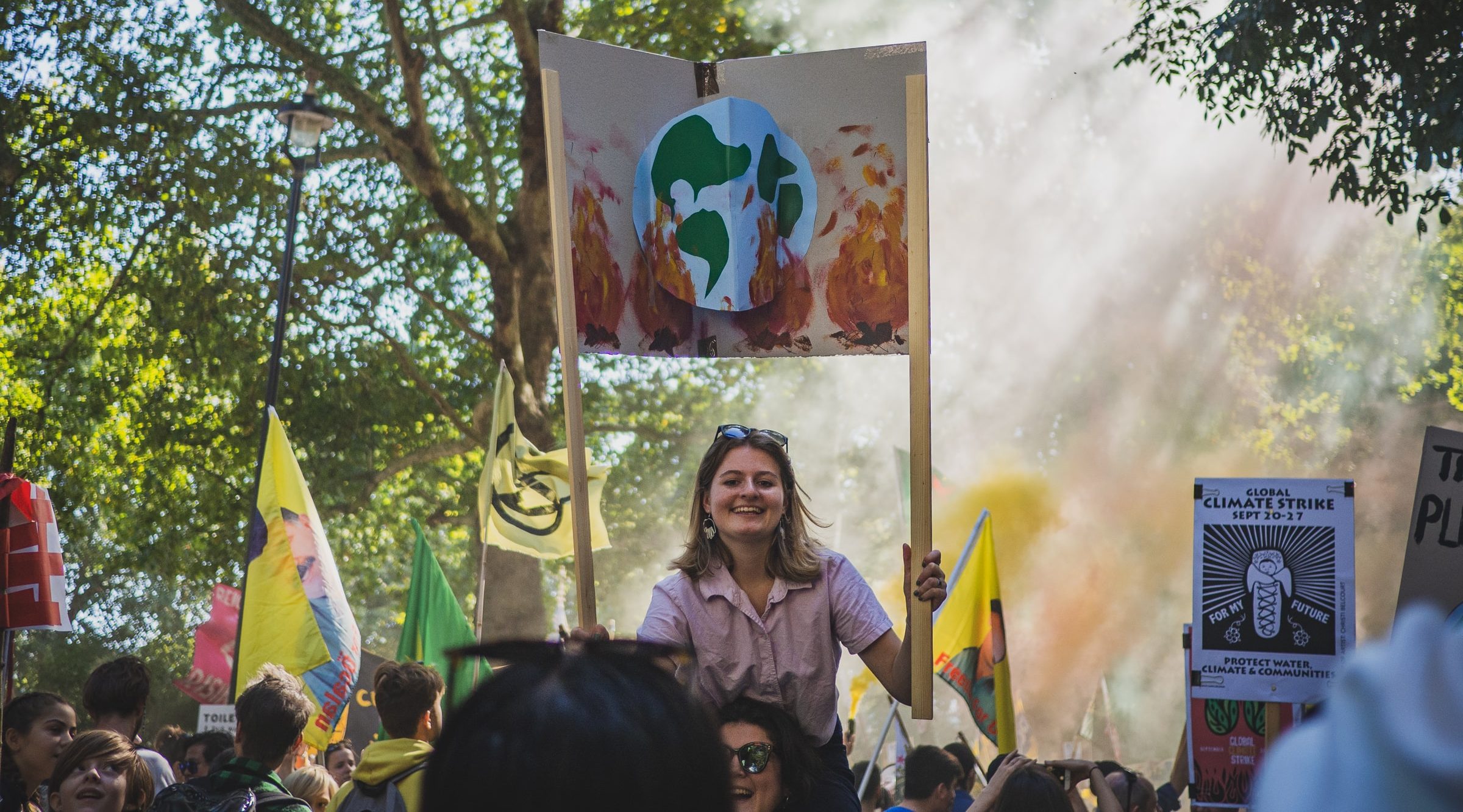
Photo by Gabriel McCallin on Unsplash
Climate, land and environmental rights defenders work against the clock to address the climate crisis and help us all live on a healthy, sustainable planet.
Human rights defenders are at the forefront of protecting their communities, the environment and key natural resources that maintain the balance in our planet. A balance that is under worsening threat. Data is clear: there is a trend of increasing attacks against human rights and environmental defenders across all regions. Globally, 604 attacks on activists working on business-related human rights issues were recorded in 2020, despite or because of the vital work they are doing so that their communities can live on their land in a healthy, sustainable manner.
Many attacks on human rights defenders are linked to business activities, with private actors either directly perpetrating the abuses or failing to act against imminent and predictable business-related harm. The situation is especially concerning in the extractives and agribusiness sectors.
Demand for natural resources is at an all-time high and continues to grow, while environmental degradation and loss of biodiversity advances. At this pace, if the global population continues to grow as predicted, by 2050 we would require three planets to provide the natural resources that currently sustain our way of living. Economic sectors linked with the exploitation of natural resources tend to be at the forefront of human rights abuses globally, such as extractive, oil and gas or those businesses linked to sectors fueling the so-called fourth industrial revolution, such as batteries or solar panels.
Moving towards a zero-carbon economy becomes indispensable. However, this transition should not be encouraged at the expense of human rights or harm to local communities. The transition towards renewable energy sources is an opportunity to address serious socio economic issues, but it has also become a threat to human rights, as abuses linked to renewable energy projects are becoming increasingly frequent.

Check out all the latest updates to this topic.
At the 62nd Human Rights Council session, civil society organisations shared reflections on key outcomes and highlighted gaps in addressing crucial issues and situations.
Despite Nepal’s international commitments, human rights violations against Indigenous Peoples continue. The new government has an opportunity to align its laws with international standards, ensure consent for projects affecting Indigenous communities, and protect the right to peaceful protest and the right to defend rights.
At the 13th World Urban Forum, the first Indigenous Peoples Caucus called for recognition of Indigenous Peoples’ rights, including self-determination, meaningful participation, protection of Indigenous defenders and culturally appropriate housing.
In a statement at a panel on climate change and human rights, ISHR and the Institute for Political Economy Sri Lanka highlighted the ‘trap’ in which States could enter if not looking at climate financing with a human rights perspective.
ISHR introduces a new on-line course on advocacy for environmental human rights defenders, a practical, self-paced resource for activists, community leaders, and allies to defend the right to a clean, healthy and sustainable environment using UN and regional mechanisms.
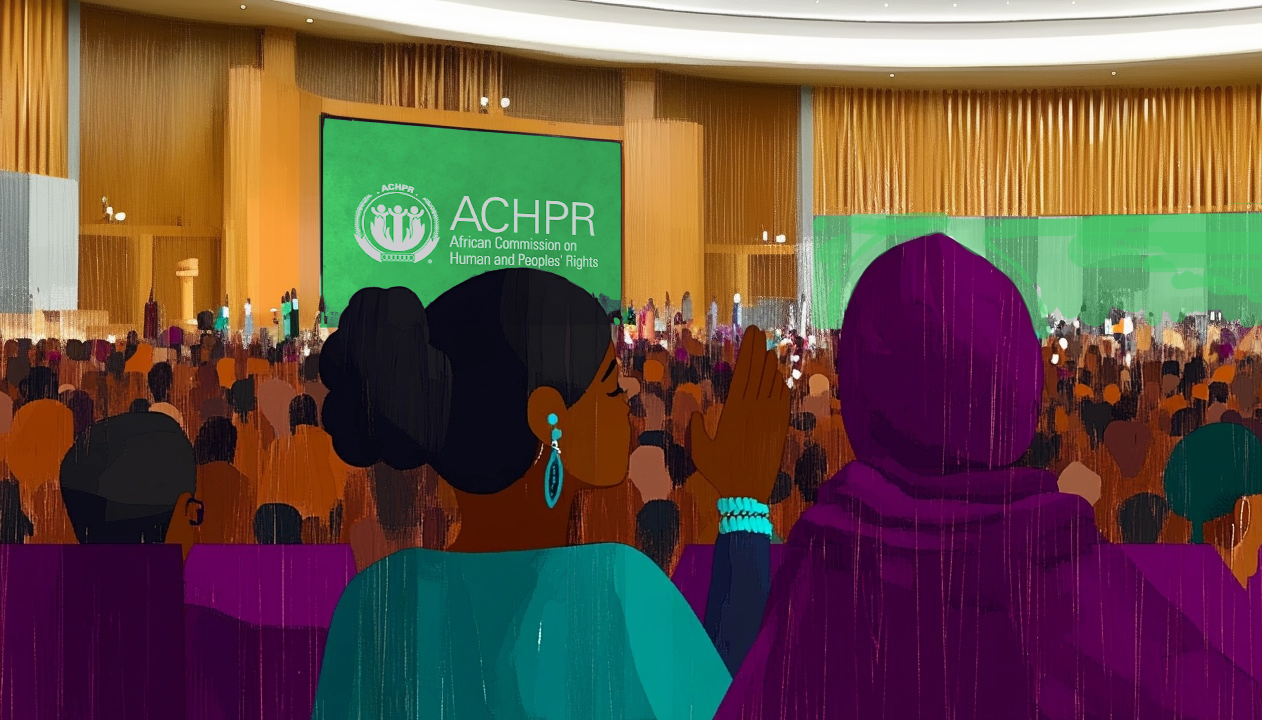
On 18 May 2026, the African Commission on Human and Peoples’ Rights (the African Commission) reviewed during its 87th ordinary session the 14th periodic report of the Republic of Kenya under the African Charter on Human and Peoples’ Rights (the African Charter) and 2nd report under the African Charter on Human and Peoples’ Rights on the rights of women in Africa (Maputo Protocol). The report covers the period from 2022-2025.
People in certain areas do not need big hotels, they do not need a huge stadium, they just need the nature to sustainably live and survive.