HRC62: Civil society presents key takeaways from the session
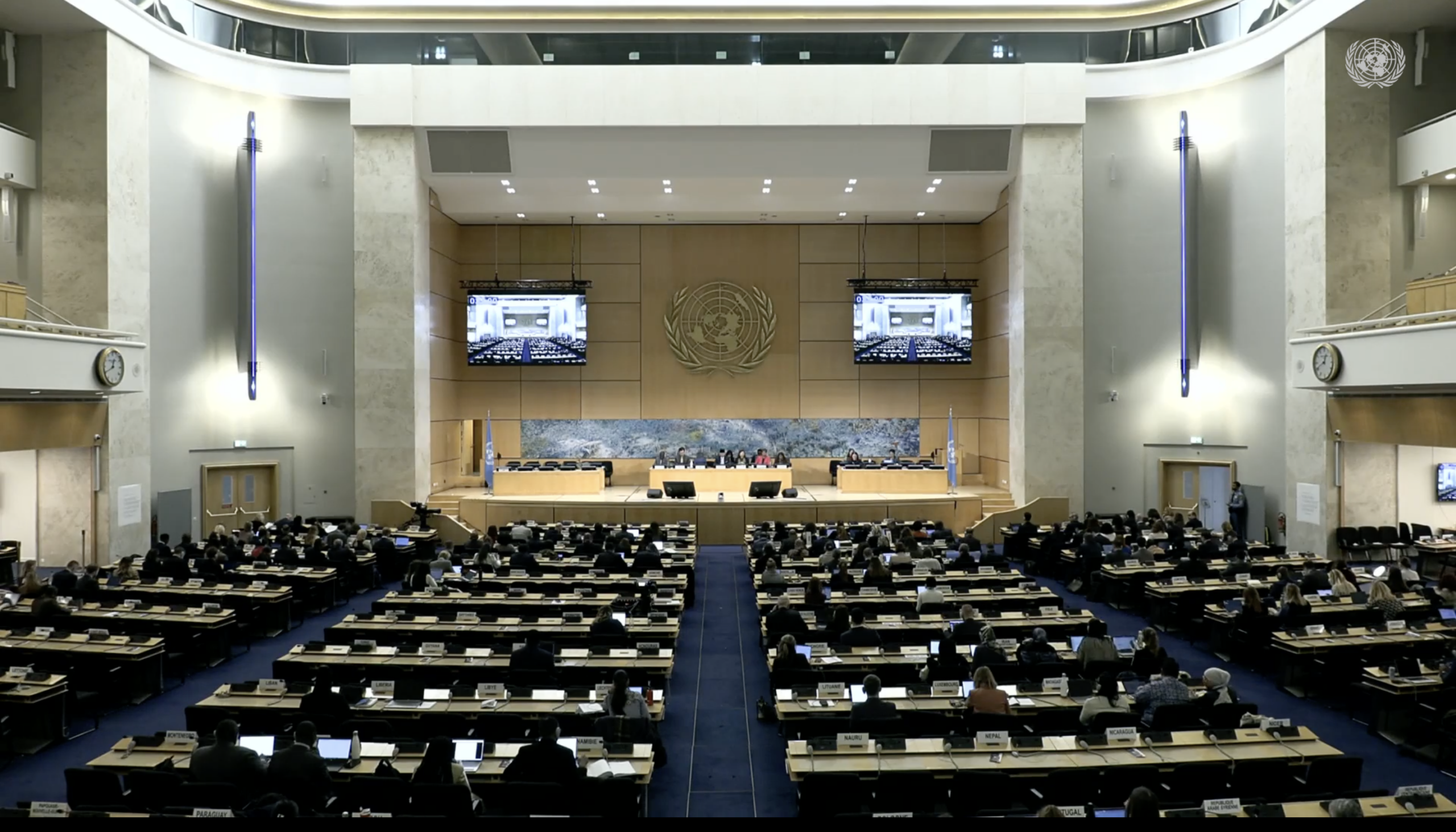
At the 62nd Human Rights Council session, civil society organisations shared reflections on key outcomes and highlighted gaps in addressing crucial issues and situations.
© Public domain
Human rights defenders promote and peacefully defend human rights in connection with territories, natural resources, livelihoods and climate in order for their communities to live sustainably.
Many human rights defenders face threats and attacks defending their community from adverse impact of business operations, often in the context of large development projects that affect access to land and livelihoods.
ISHR believes that businesses and human rights defenders operate in and benefit from a “shared civic space” defined by common, fundamental essential freedoms. These are essential to the realisation of all human rights, but also critical to enable stable, profitable and sustainable business environments in which companies thrive and economies, communities and people prosper.
Today, the human rights and business norms require global companies to behave responsibly and assess the human rights risks associated with their operations. Companies can no longer hide behind complex international supply chains or a network of subsidiaries owned by authoritarian leaders. Businesses have a responsibility to understand the complexities of the countries where they invest, to examine the suppliers they buy from, and to take into consideration the potential for impact associated with operating in countries where governance is weak and the rule of law is fragile.
ISHR works with human rights defenders who advocate for business and human rights issues. Particularly:
Check out all the latest updates to this topic.
At the 62nd Human Rights Council session, civil society organisations shared reflections on key outcomes and highlighted gaps in addressing crucial issues and situations.
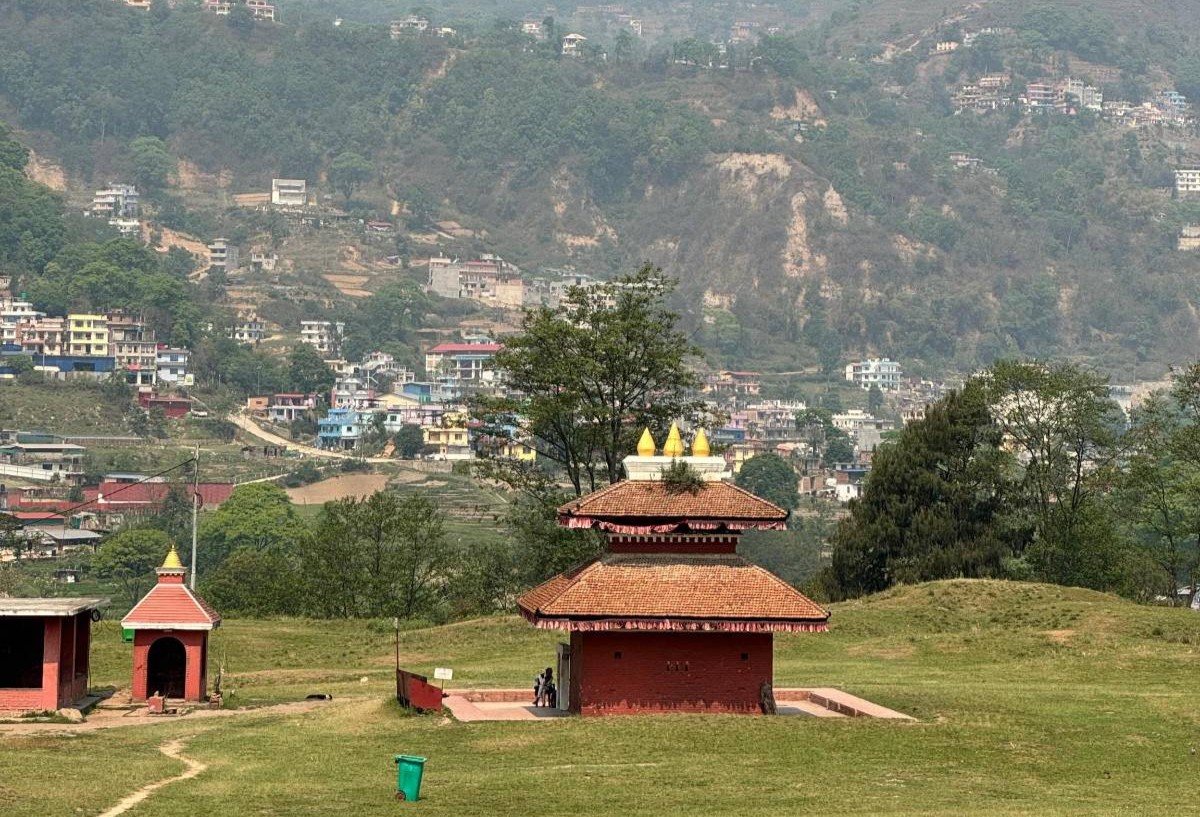
Despite Nepal’s international commitments, human rights violations against Indigenous Peoples continue. The new government has an opportunity to align its laws with international standards, ensure consent for projects affecting Indigenous communities, and protect the right to peaceful protest and the right to defend rights.
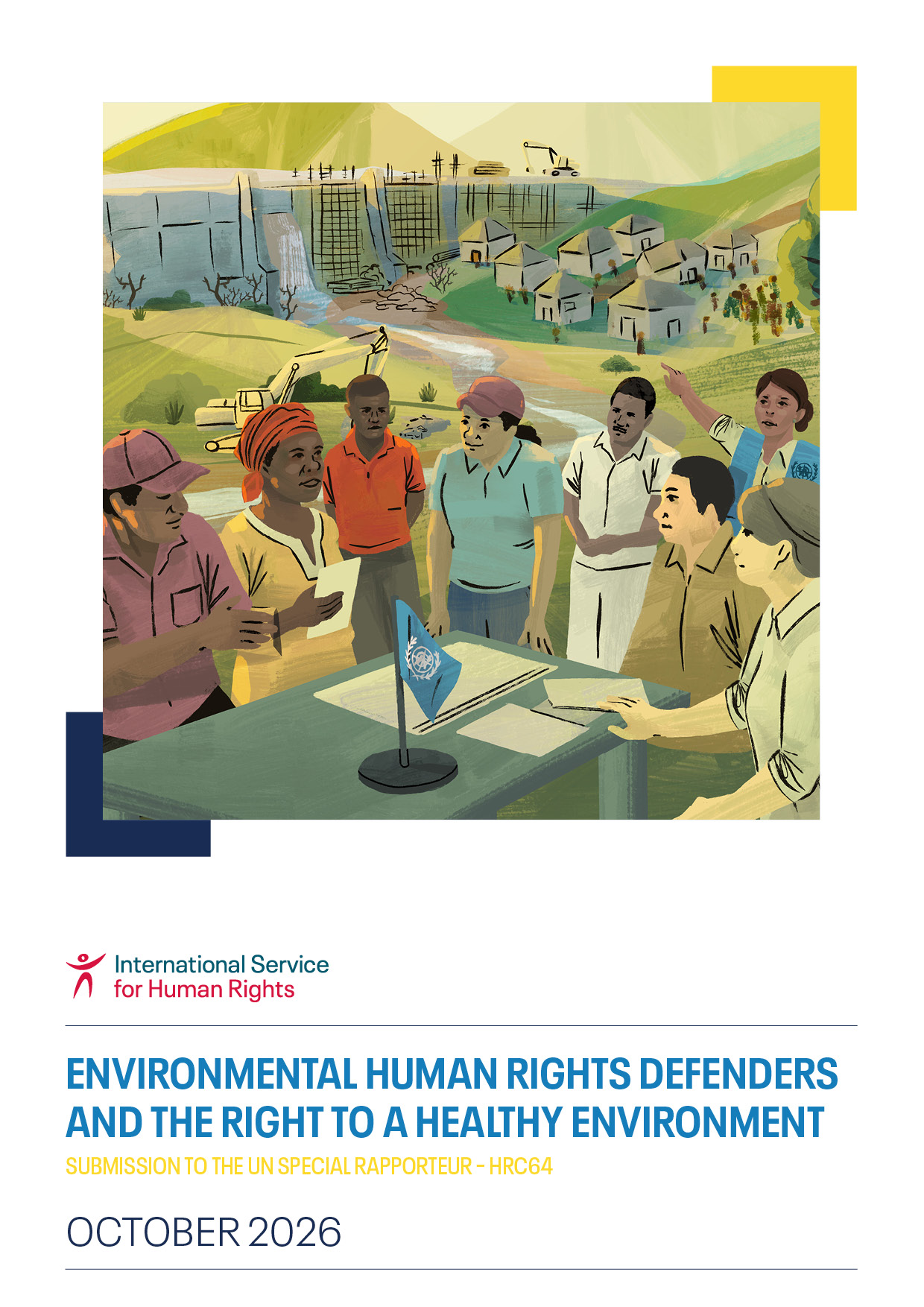
ISHR introduces a new on-line course on advocacy for environmental human rights defenders, a practical, self-paced resource for activists, community leaders, and allies to defend the right to a clean, healthy and sustainable environment using UN and regional mechanisms.
On 18 May 2026, the African Commission on Human and Peoples’ Rights (the African Commission) reviewed during its 87th ordinary session the 14th periodic report of the Republic of Kenya under the African Charter on Human and Peoples’ Rights (the African Charter) and 2nd report under the African Charter on Human and Peoples’ Rights on the rights of women in Africa (Maputo Protocol). The report covers the period from 2022-2025.
At the latest intersessional meetings of the open-ended intergovernmental working group on business and human rights, States, legal experts and civil society organisations discussed key articles including scope, mutual legal assistance and future implementation of the Legally Binding Instrument.
The Special Rapporteur on Adequate Housing presented his final report on his visit to Guatemala, with recommendations seeking to address decades of displacement, dispossession of land against Indigenous Peoples, and the criminalisation of defenders.
Check out all our resources to this topic.
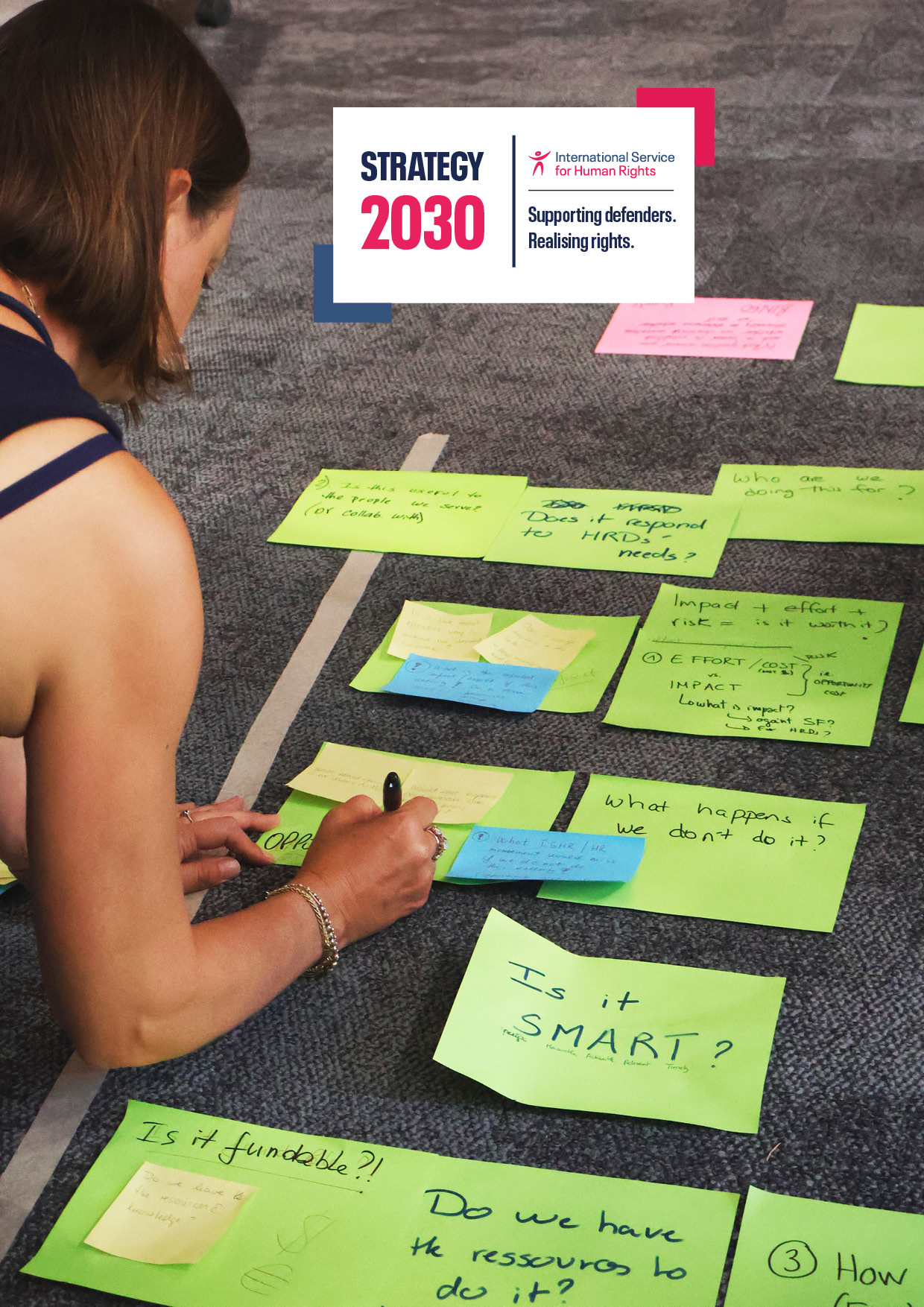
After extensive internal and external consultations, ISHR has just released its Strategy 2030, our new Strategic Framework.
This report summarises and assesses progress and challenges over the past decade in relation to business frameworks, guidance, initiatives and tools to protect human rights defenders that have emerged at local, national and regional levels.
ISHR's new indicators are designed to provide baseline guidance on what is required to monitor the implementation of the responsibility of business to respect the rights of human rights defenders.
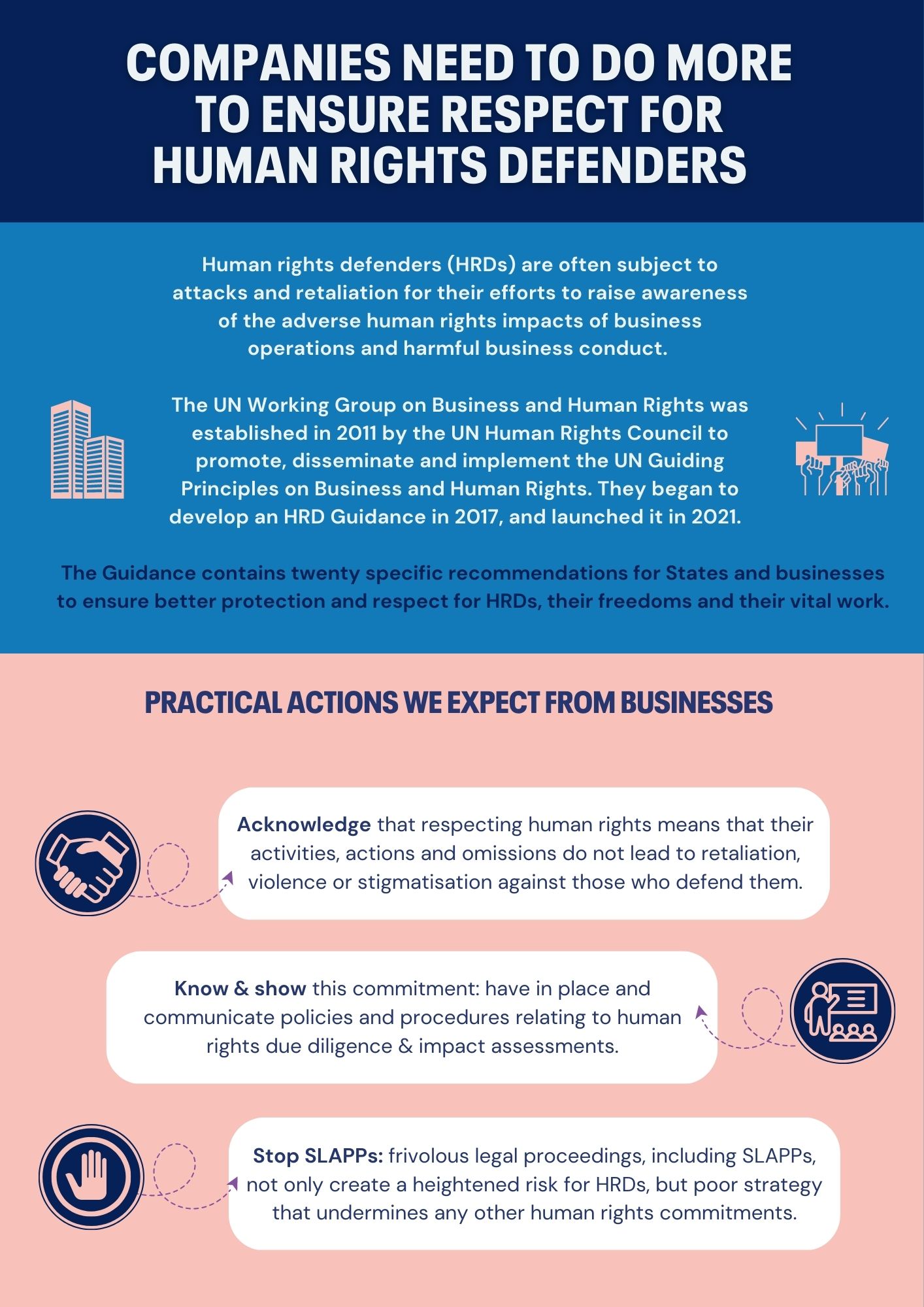
ISHR has developed a simple list of ten concrete actions the UN Working Group on Business and Human Rights says businesses should take to respect human rights defenders and adhere to the UN Guiding Principles.
This report submitted to the UN explores 14 business ventures in Latin America in which companies and banks under China's jurisdiction have not complied with international human rights, labour and environmental standards.
On 31 August 2022, the Office of the High Commissioner for Human Rights (OHCHR) released its much-awaited report on serious human rights violations in the Uyghur region (Xinjiang). ISHR prepared a multilingual explainer to break down the report's findings.
Live in a better world, a just and humane society in harmony with nature and climate.