HRC 52: Families of forcibly disappeared Syrians call for a mechanism to reveal the fate of the missing
During the Interactive Dialogue with the Commission of Inquiry on Syria under agenda item 4, ISHR and the Truth and Justice Charter Group delivered a joint statement addressing the continued suffering of families of forcibly disappeared Syrians at the hand of all parties to the conflict in Syria.
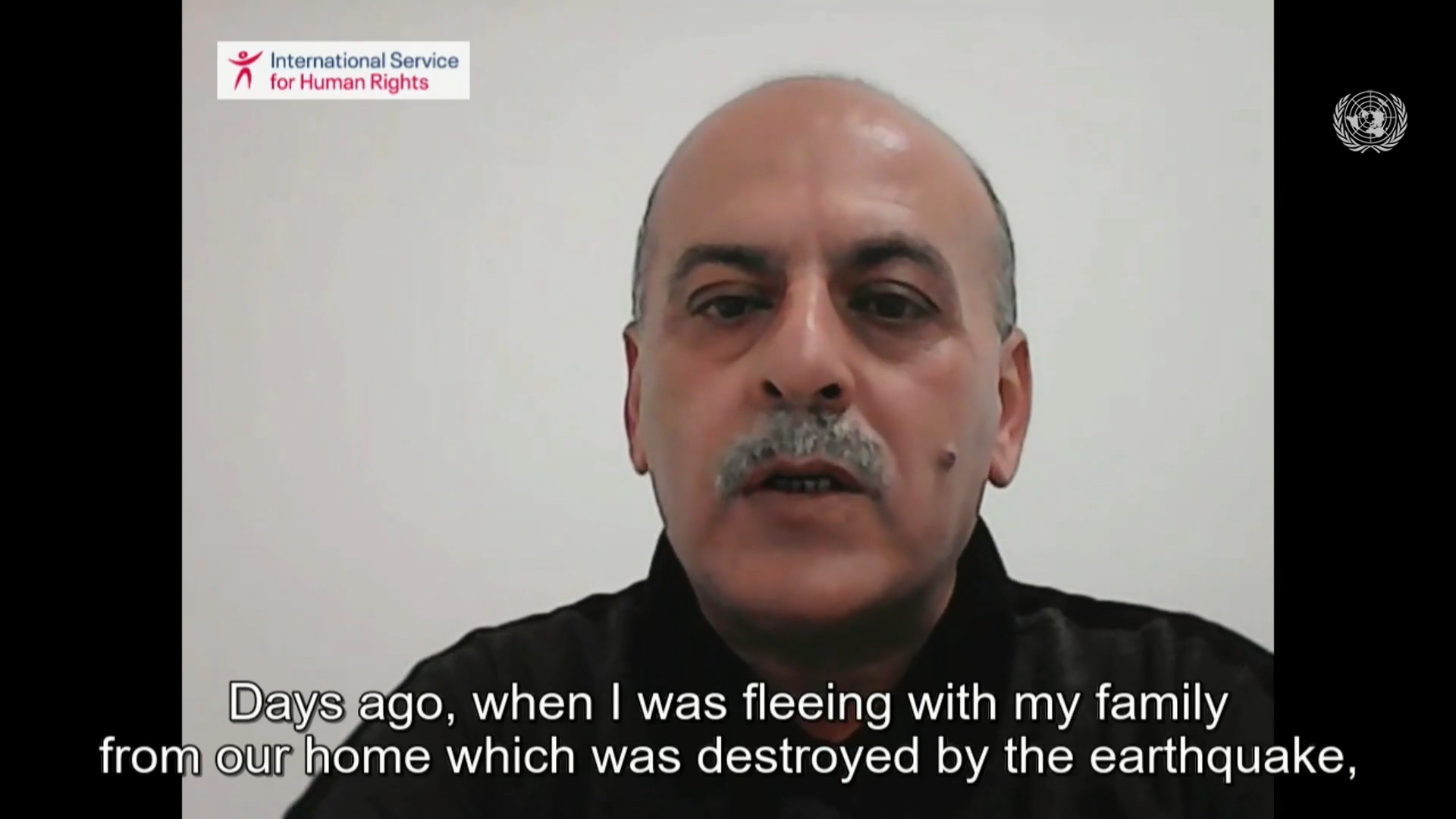
Speaking on behalf of a coalition of 10 associations of survivors and families of individuals disappeared by all parties to the conflict, Anas Tello addressed the case of his nephew, Obaida Dello, who remains forcibly disappeared since 2014 following his kidnapping by the Hay’at Tahrir al-Sham.
Building on the calls of victims and their families, there has been mounting recognition for the need to establish an institution to reveal the fate and whereabouts of missing persons while ensuring that victims have a central role in the process, including by the CoI on Syria, UN High Commissioners for Human Rights, Secretary-General and member States.
During the Interactive Dialogue, the European Union, amongst others, supported the establishment of ‘a new international body on missing people in Syria based on the recommendations contained in last August’s report by Secretary-General on this matter.’ Belgium also informed the Council that it ‘will take up a role in the Core Group for this initiative, which is currently taking shape’ in the UNGA in New York, stressing the need for a ‘wide cross-regional support for this humanitarian pursuit.’
Read the statement and watch it in the below video:
Mr. President,
This is a joint statement on behalf of ISHR and the Truth and Justice Charter Group.
My name is Anas Dello. I am a Syrian lawyer and co-founder of the Families of Truth and Justice. I am the uncle of Obaida Dello who remains forcibly disappeared, following his kidnapping by the Hay’at Tahrir al-Sham in 2014, while he was a minor, 16 years of age.
His situation resembles that of tens of thousands of forcibly disappeared Syrians at the hand of all parties to the conflict in Syria, primarily by the Syrian authorities. Forcible disappearance is a strategy used by all warring parties in Syria since 2011 to break the will of the Syrian people, where those detained are victims of killing, torture, sexual and gender-based violence. As the conflict intensifies, the violations against those forcibly disappeared escalates.
Days ago, when I was fleeing with my family from our home which was destroyed by the earthquake, I thought of the forcibly disappeared who do not even have the luxury to flee, and the hundreds of families of those arbitrarily detained and forcibly disappeared who suffered gross human and financial losses. Moreover, the fact that the Syrian regime used this catastrophe to cover up its destruction which followed military operations, has increased our fear and that of the families of victims of enforced disappearance of using this to liquidate our loved ones who remained alive.
To put an end to the suffering of the families of the forcibly disappeared and arbitrarily detained, we call on the UN to take on its role and assume its responsibility in this grave humanitarian crisis through the implementation of the recommendations of the Human Rights Council, the Commission of Inquiry on Syria, and the High Commissioner for Human Rights. We call on UN member states to support the establishment of an international body to reveal the fate of our missing loved ones, and ensure a central role of the victims in this body, through the UN General Assembly, and pursuant to the report by the Secretary General.
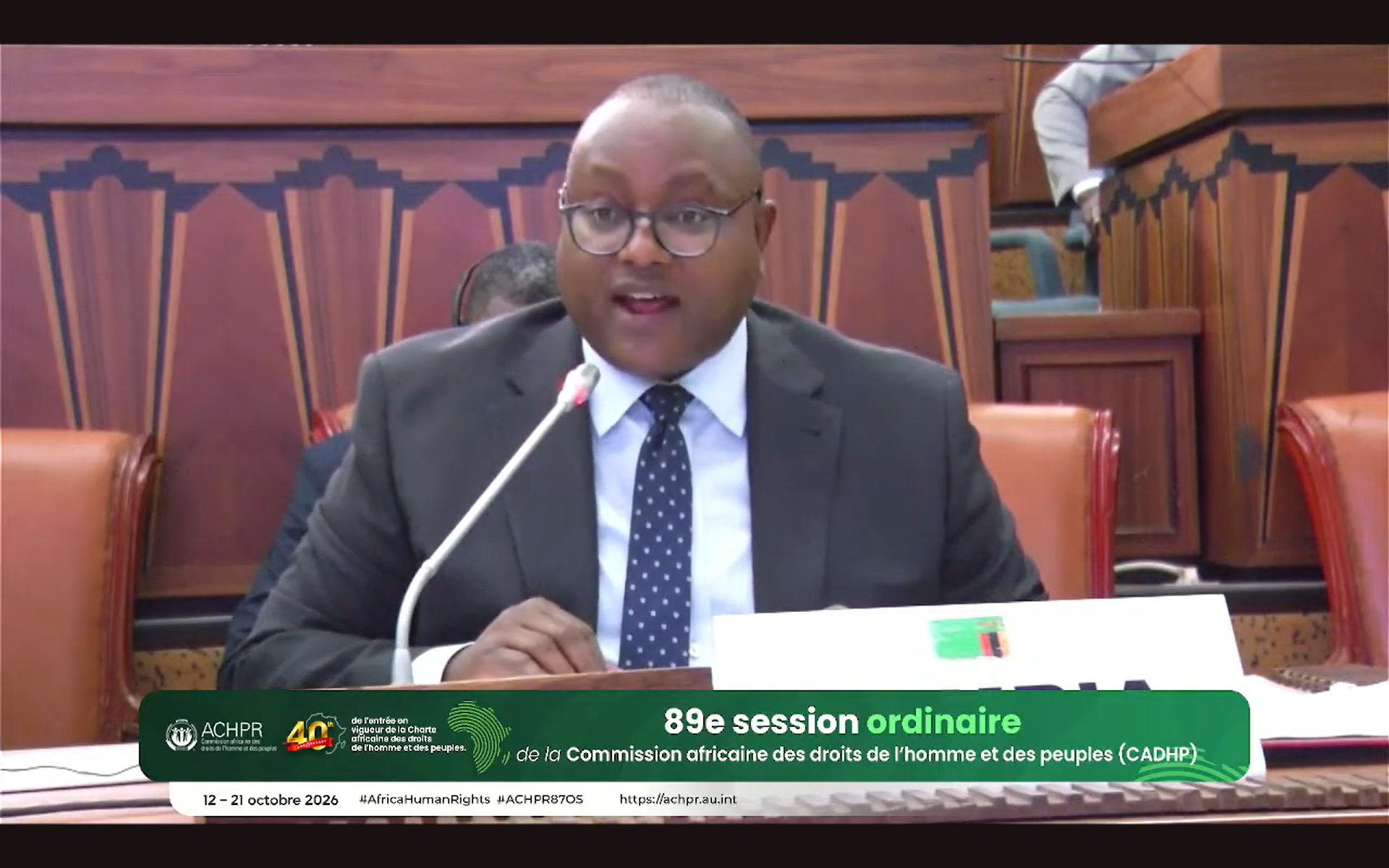
Zambia must ensure that human rights defenders can speak out, organise and work freely. In a joint submission to the African Commission, ISHR, SACCORD and ZNHRD highlight restrictive legislations and call for progress towards the adoption of the law for the promotion and protection of the rights of defenders.
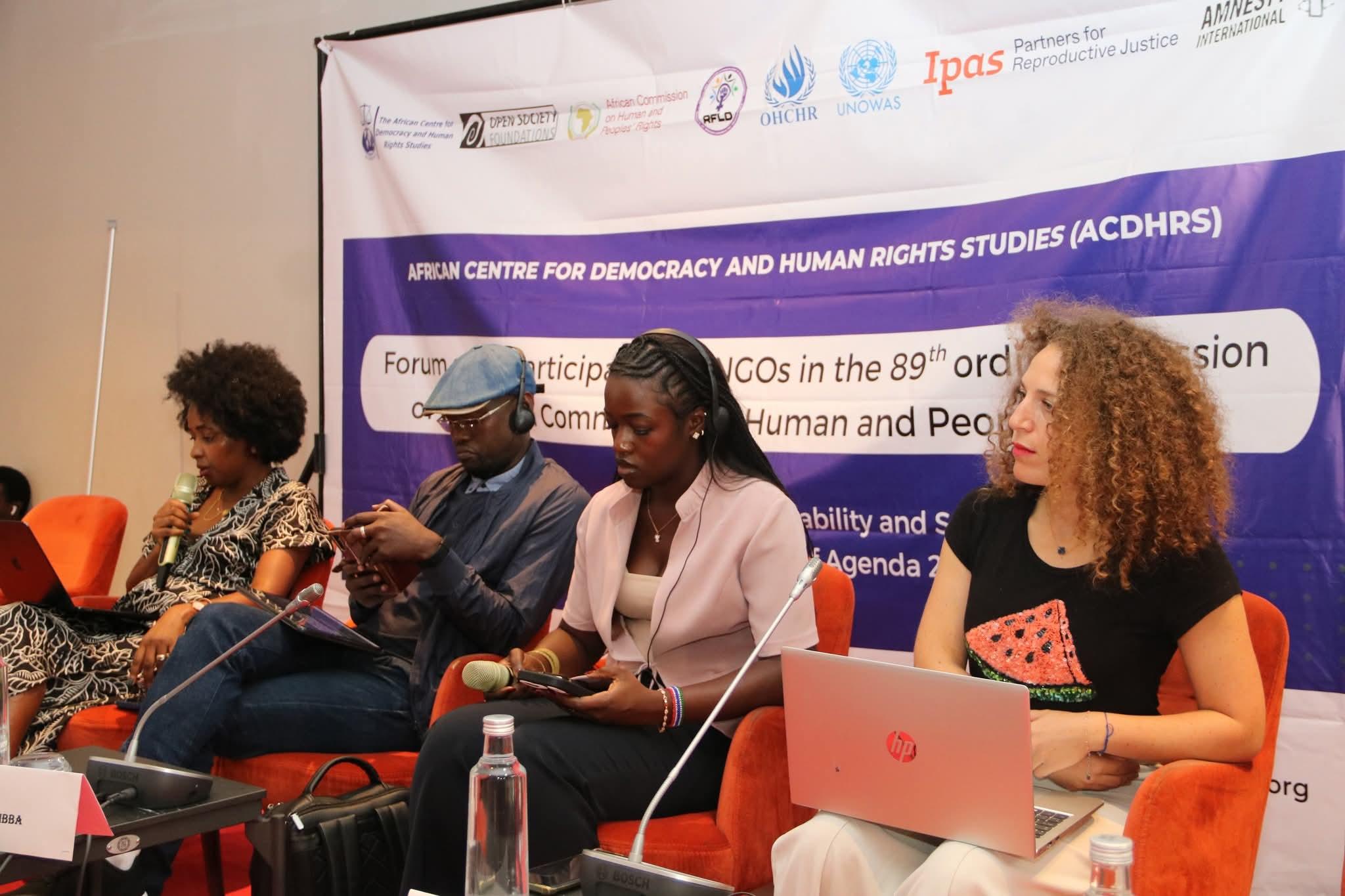
At the NGO Forum ahead of the 89th session of the African Commission, a high-level panel discussion tackled the growing issue of transnational repression in Africa.
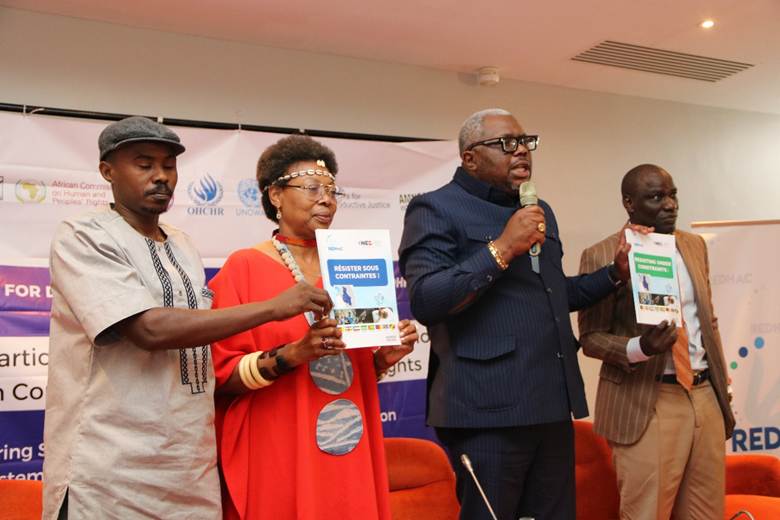
Ahead of the 89th session of the African Commission on Human and Peoples' Rights, the NGO Forum convened a panel on cross-border issues affecting human rights defenders in Central Africa and presented a new publication.