
HRC34 | Council unites to stand with human rights defenders
The Human Rights Council has united to adopt a consensus resolution on the protection of human rights defenders. The resolution, extending the mandate of the UN Special Rapporteur, comes at a time when the work of defenders has never been more important nor more threatened.
(Geneva) – The UN Human Rights Council – the world’s peak human rights body – has today adopted a resolution which affirms the vital and legitimate work of human rights defenders and extends the mandate of a UN expert tasked to support and protect them.
The resolution, led by Norway and strongly supported by a coalition of leading NGOs and human rights experts, was adopted by consensus and without amendment after attempts to weaken it by States including Russia, China, Cuba and Pakistan were soundly defeated.
Work of defenders is vital, deserving not just admiration but protection, Council says
‘Through this resolution the Council has sent an important signal that human rights work is legitimate, and that human rights defenders must be respected and protected by States and non-state actors,’ said ISHR’s Director of Human Rights Council Advocacy, Michael Ineichen.
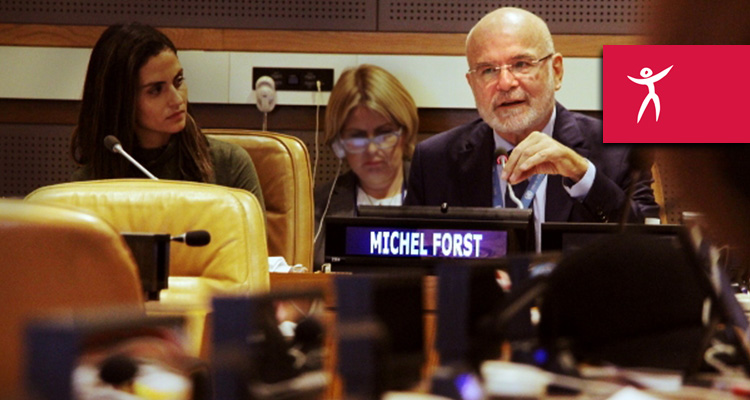
The renewal of the mandate of the UN Special Rapporteur, Michel Forst, comes at a vital time. In his most recent report, the Special Rapporteur compiled disturbing evidence that human rights defenders are under ‘unprecedented attack’, including ‘increasing killings’.
‘The fact that a majority of States, from all regions of the world, decided to defy the political heavy weights Russia and China, and instead stand with human rights defenders, is an encouraging sign,’ said Ineichen. ‘It is an act of principle and bravery to confront prejudice and power.’
Strong and diverse support for protection of defenders
The resolution was presented and negotiated by Norway, and benefited from the support of over 80 States. Notable supporters included States that have recently adopted or are in the process of adopting national laws to protect human rights defenders – such as Cote d’Ivoire and Mali – as well as several States that only recently joined the Human Rights Council, such as Togo and Tunisia. States including Albania, Germany, Hungary, Korea, Paraguay, Switzerland and the United Kingdom all spoke strongly against the hostile amendments proposed by Russia, China and others.
‘At a time of global uncertainty, principled leadership on human rights is at a premium. Seeing States step up to share their positive national experience, and take their membership in the Human Rights Council seriously is an important part of rising to this challenge,’ Ineichen said.